As the leaves change in Northeast Ohio, Holden Arboretum is the top spot to view peak fall color.
We will keep our color thermometer updated daily and feature the trees and plants showcasing their fall color best as the season progresses.
Color Highlights 2024
Peak fall color has arrived at the Holden Arboretum!
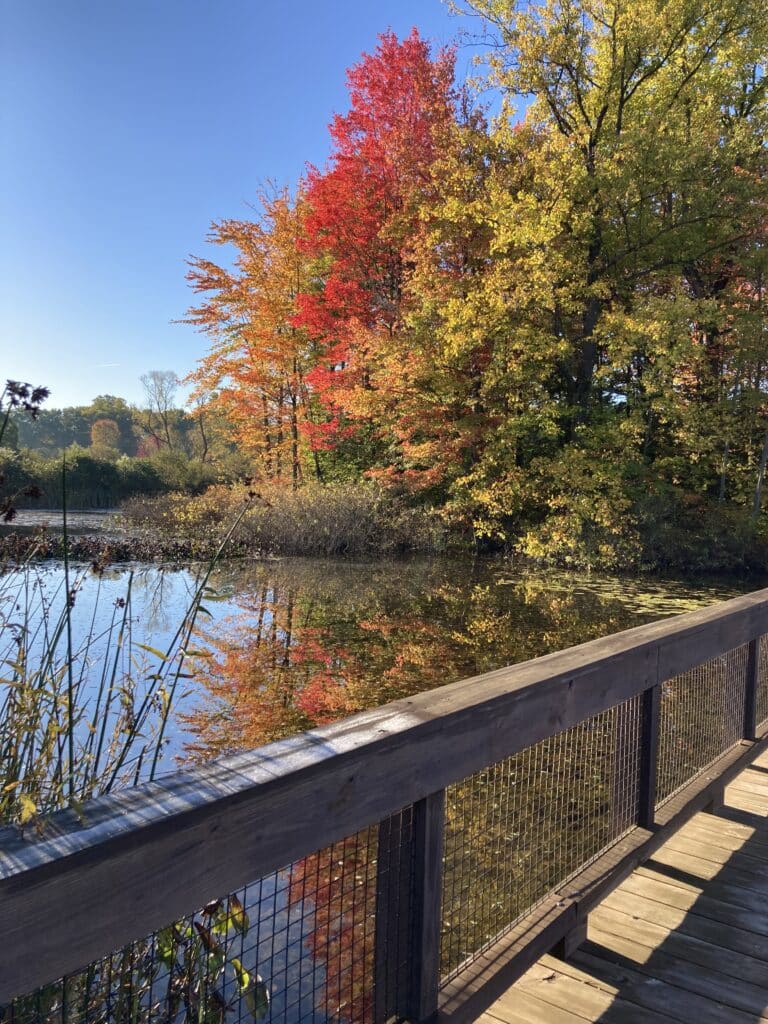
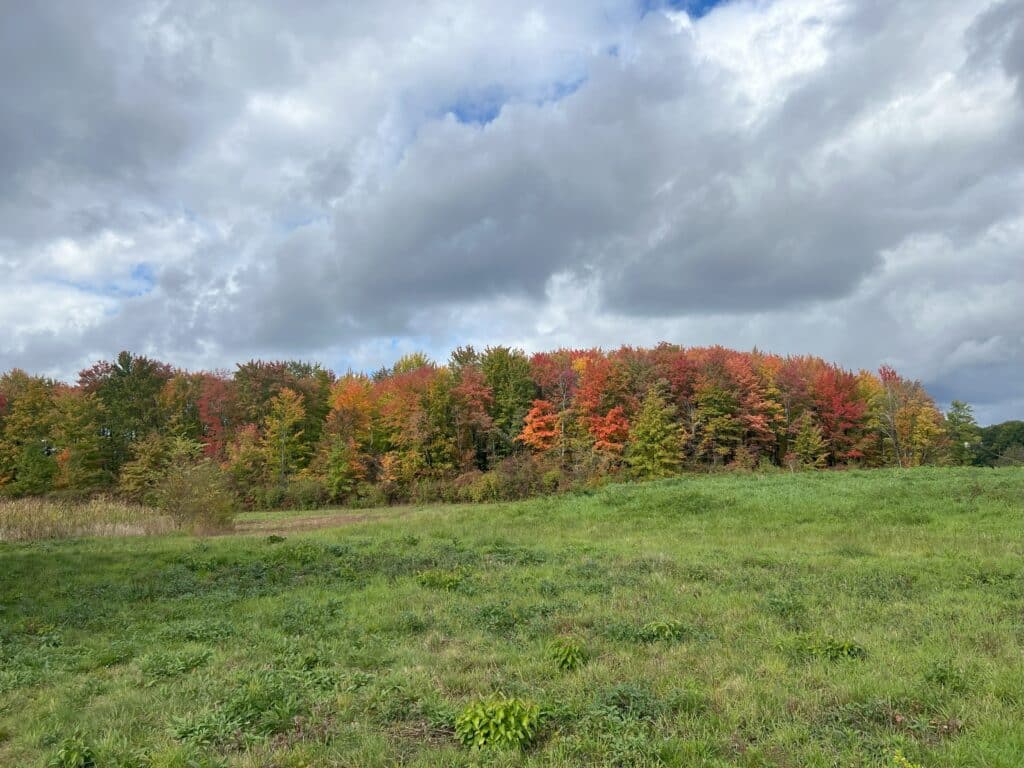
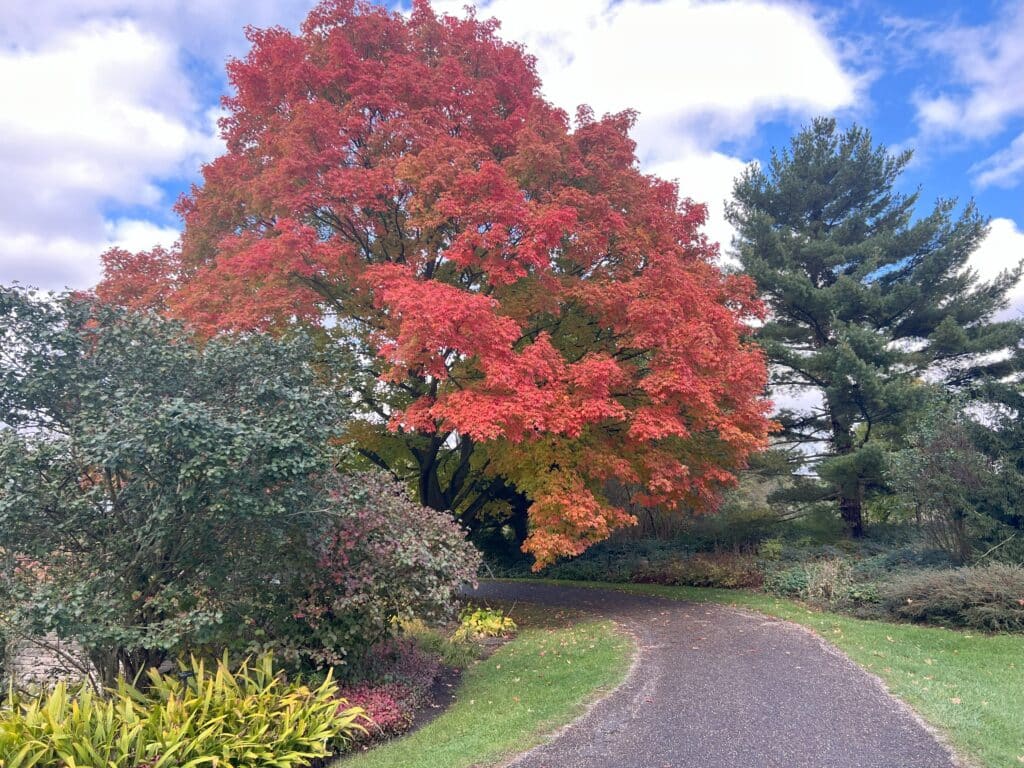
Read about the progression of fall color at both campuses on our blog.






Color Highlights 2023
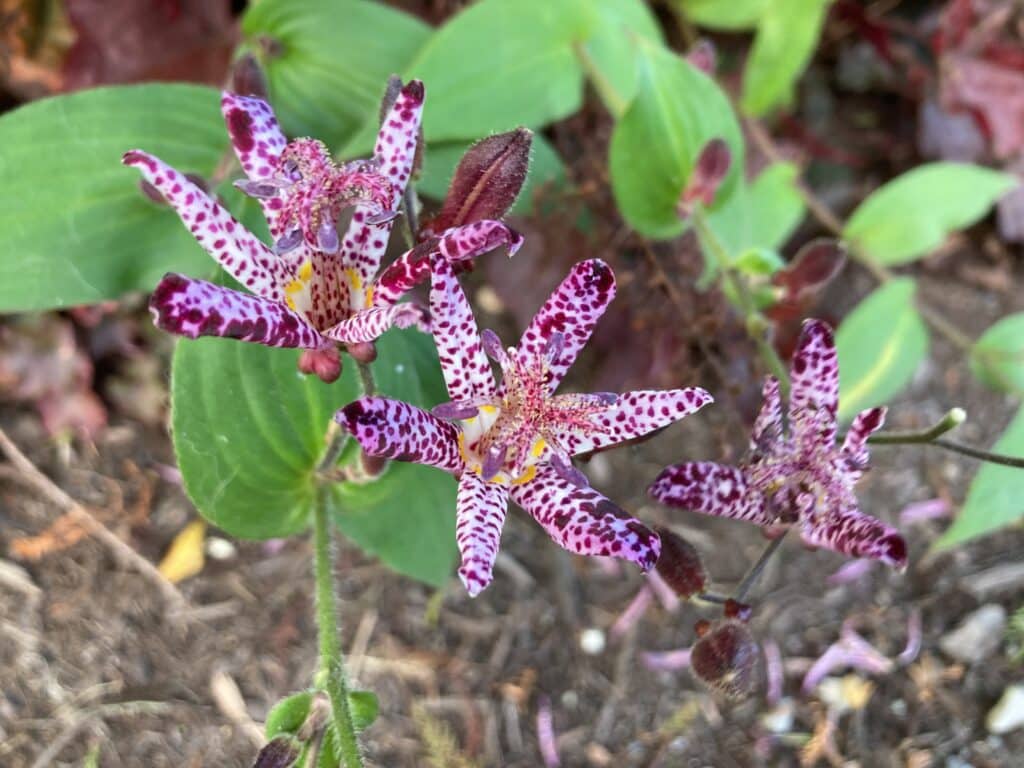
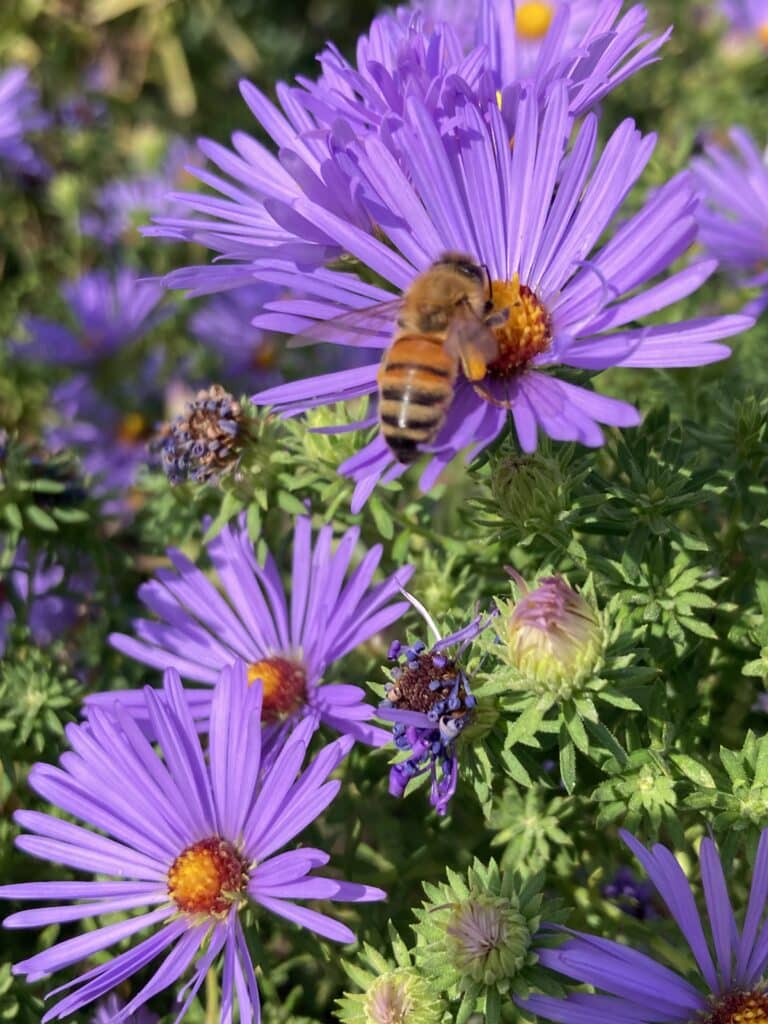
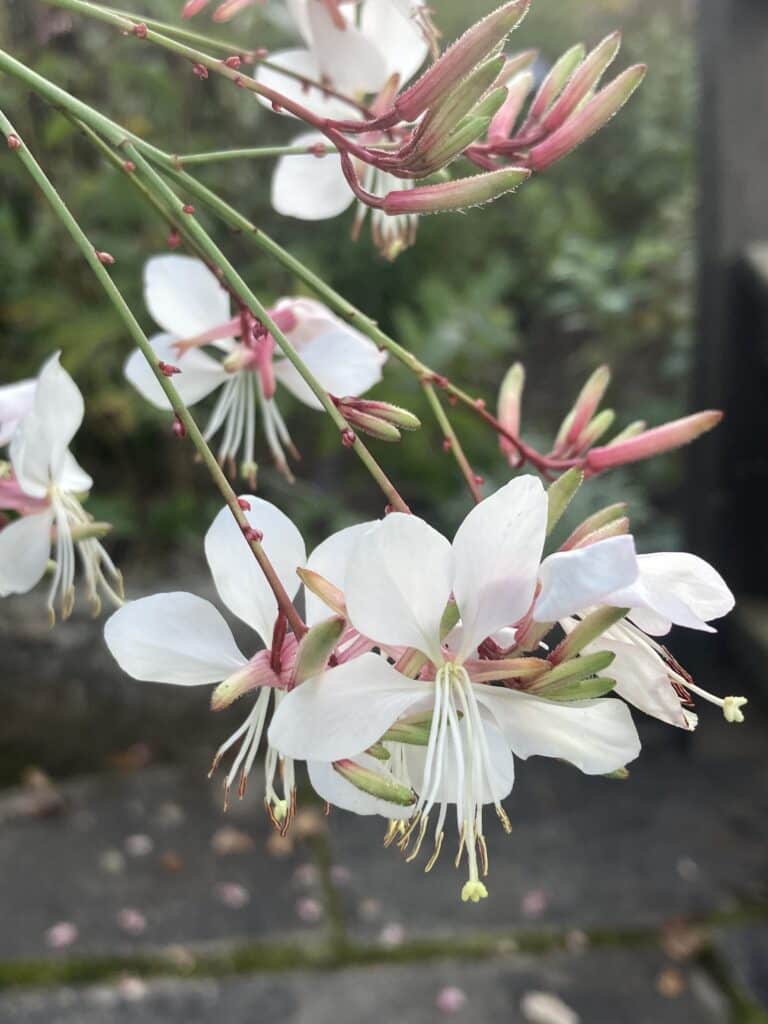
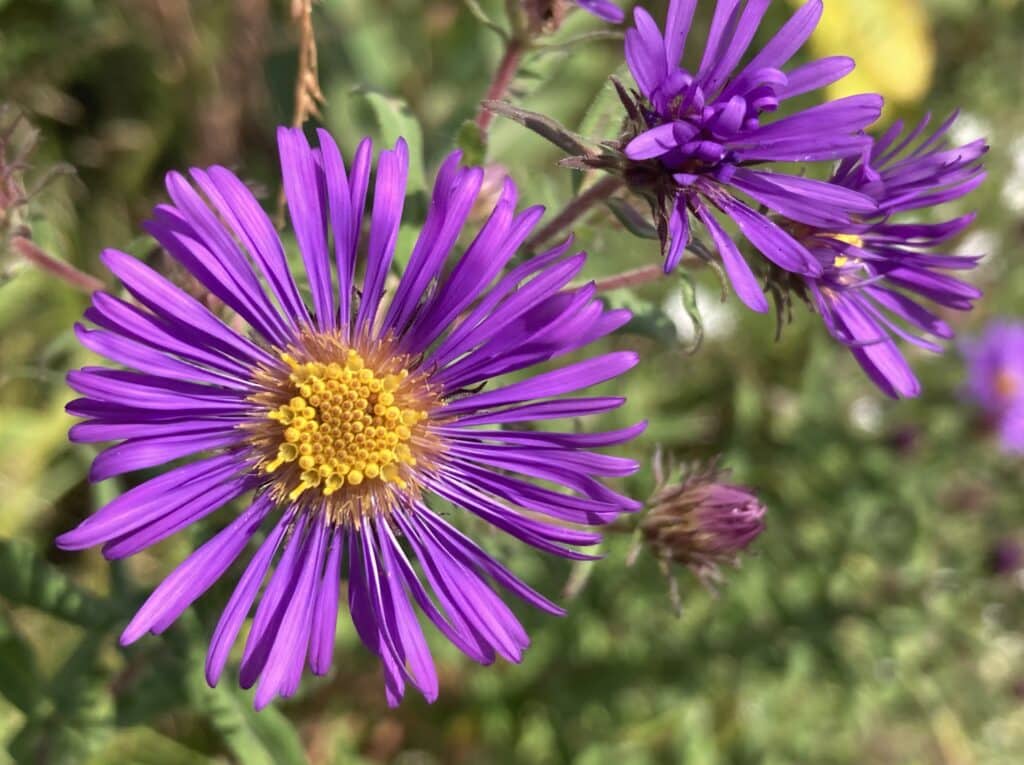
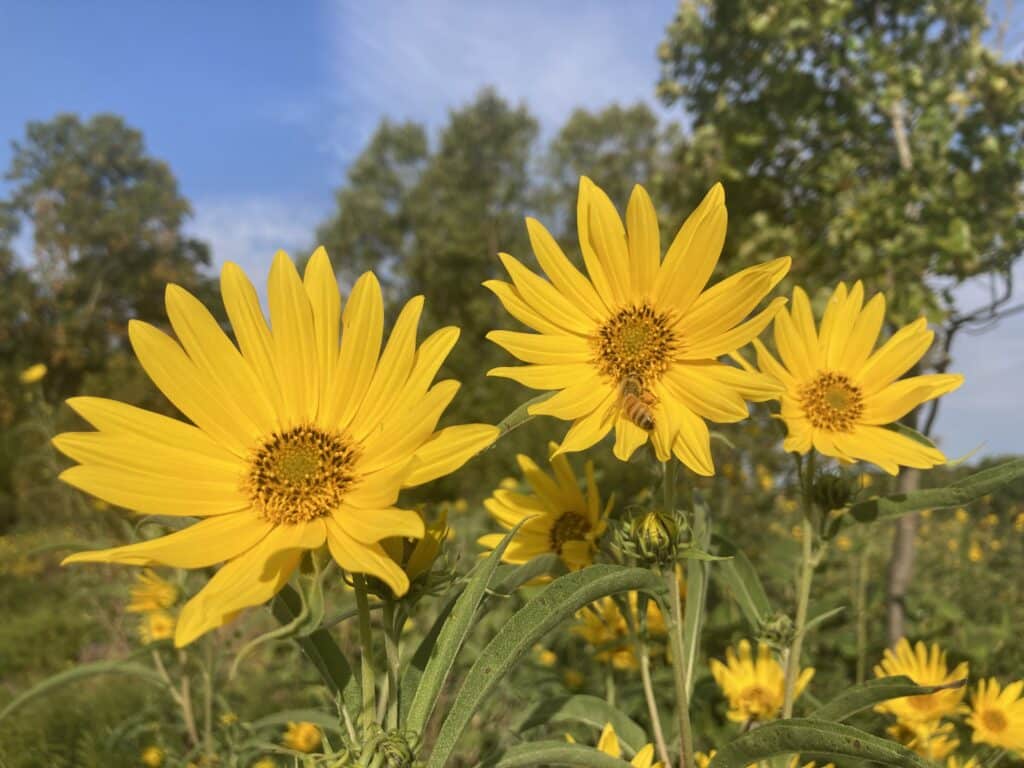
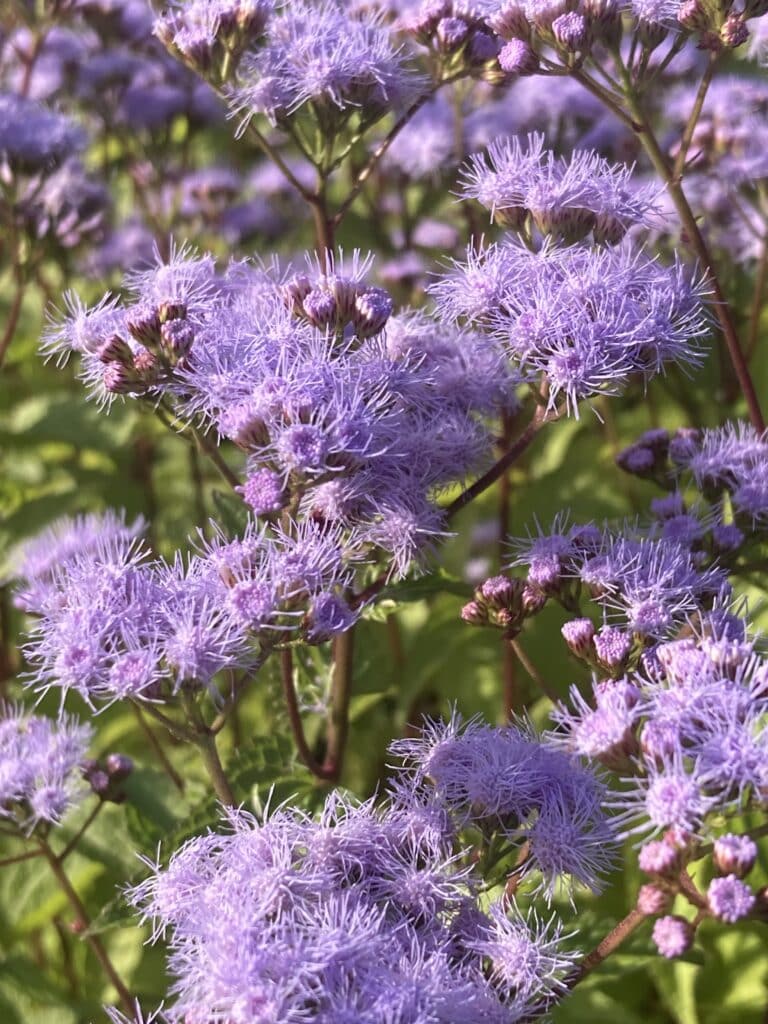
The leaves have started falling in northeast Ohio, but much of the color remains. Rich hues of yellow and orange persist, creating ethereal landscapes throughout the Holden Arboretum. The Cleveland Botanical Garden still has the last blooms of fall, mixed within the autumn color. Both campuses will be great to visit this week!
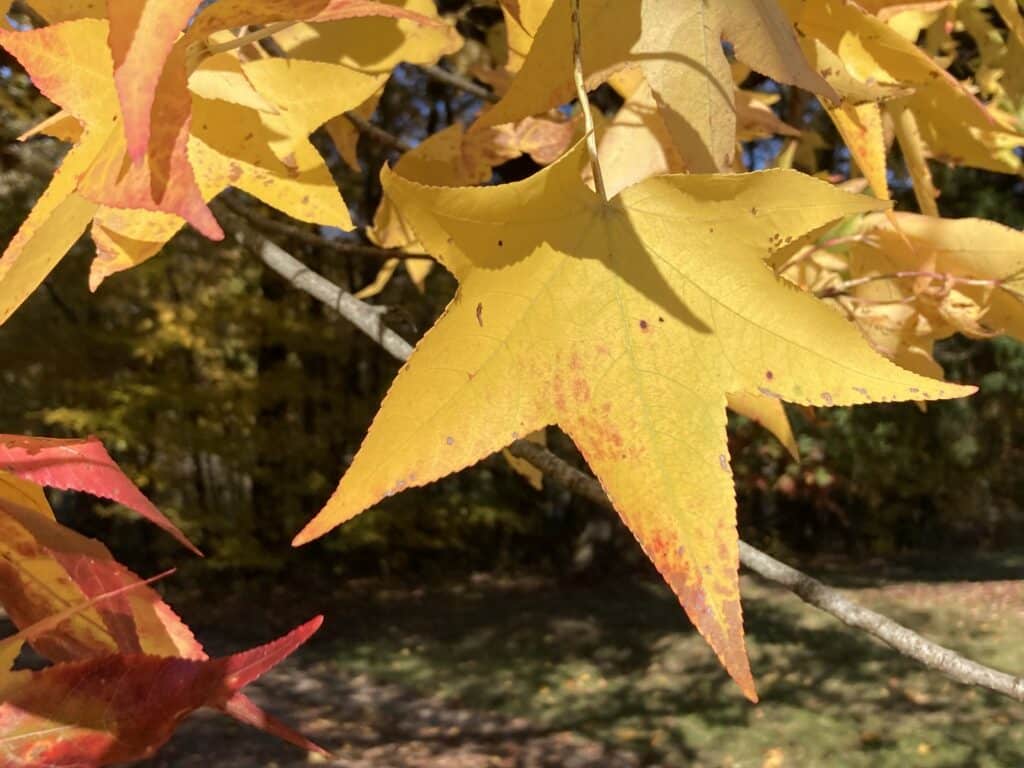
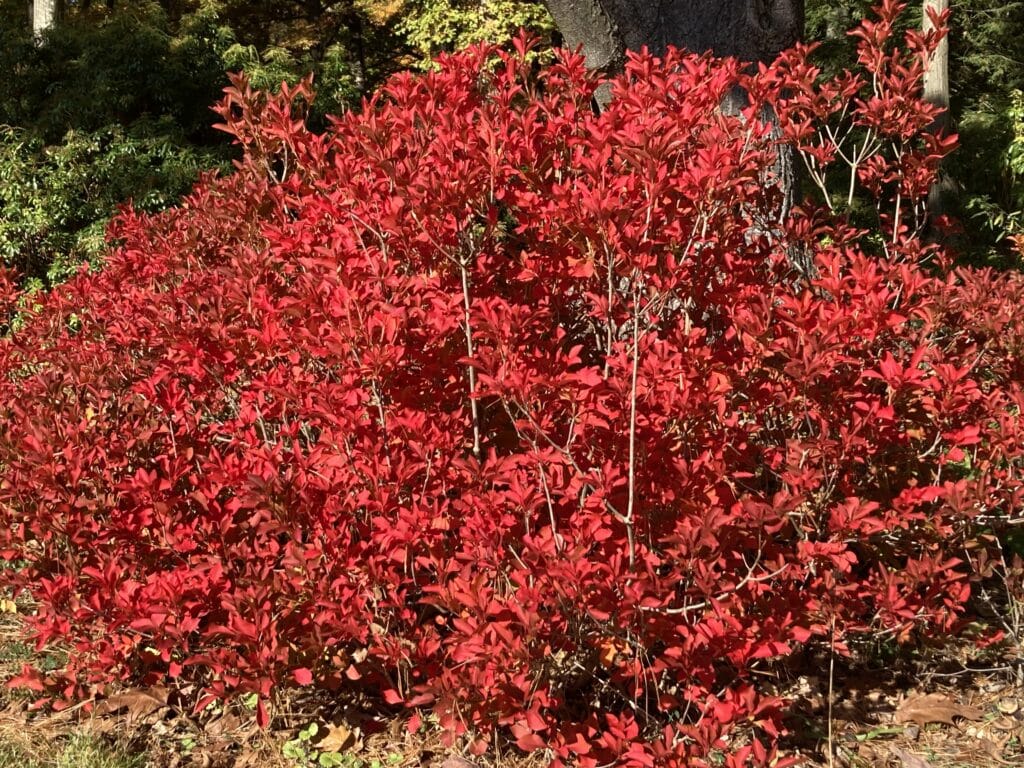
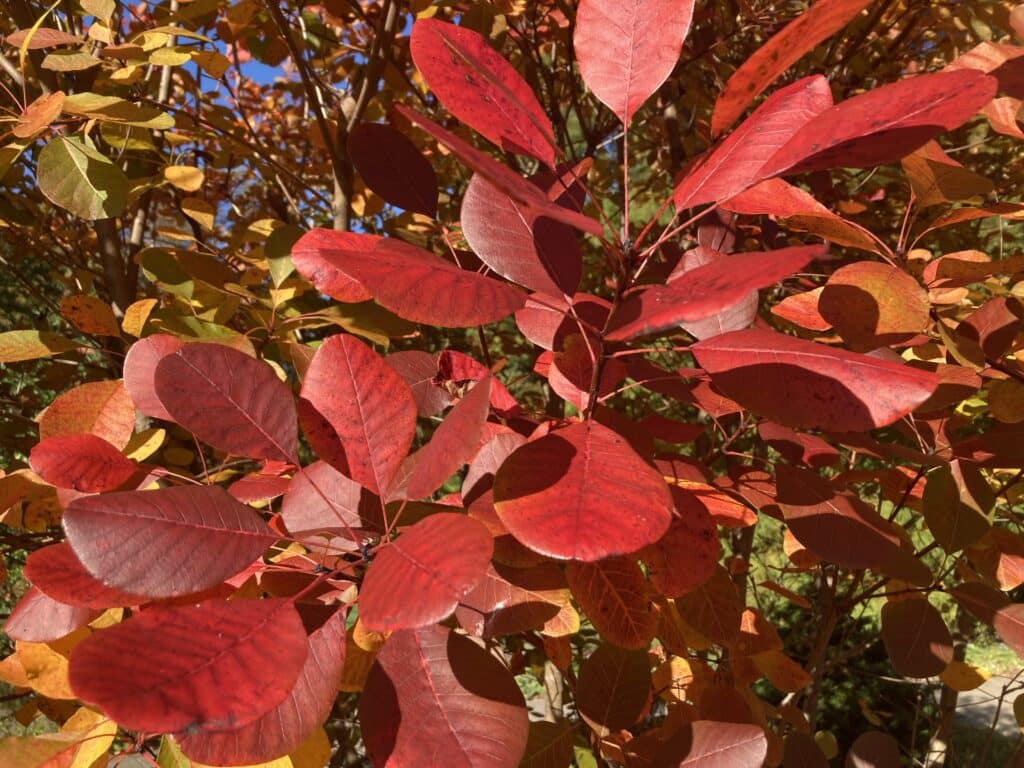
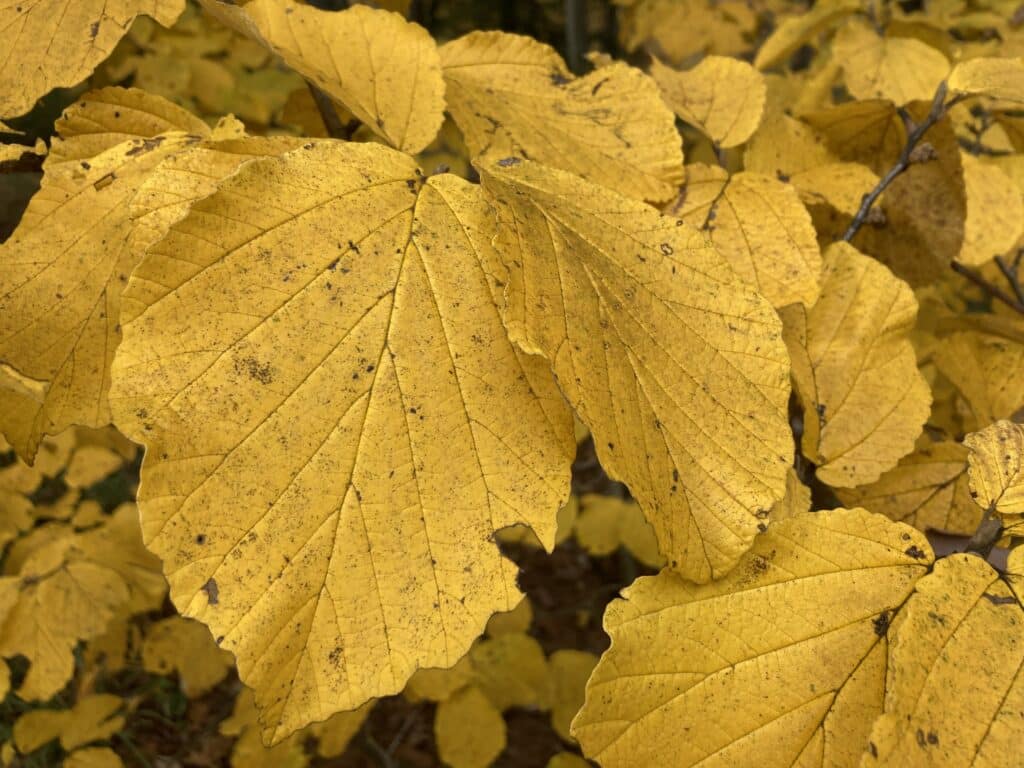
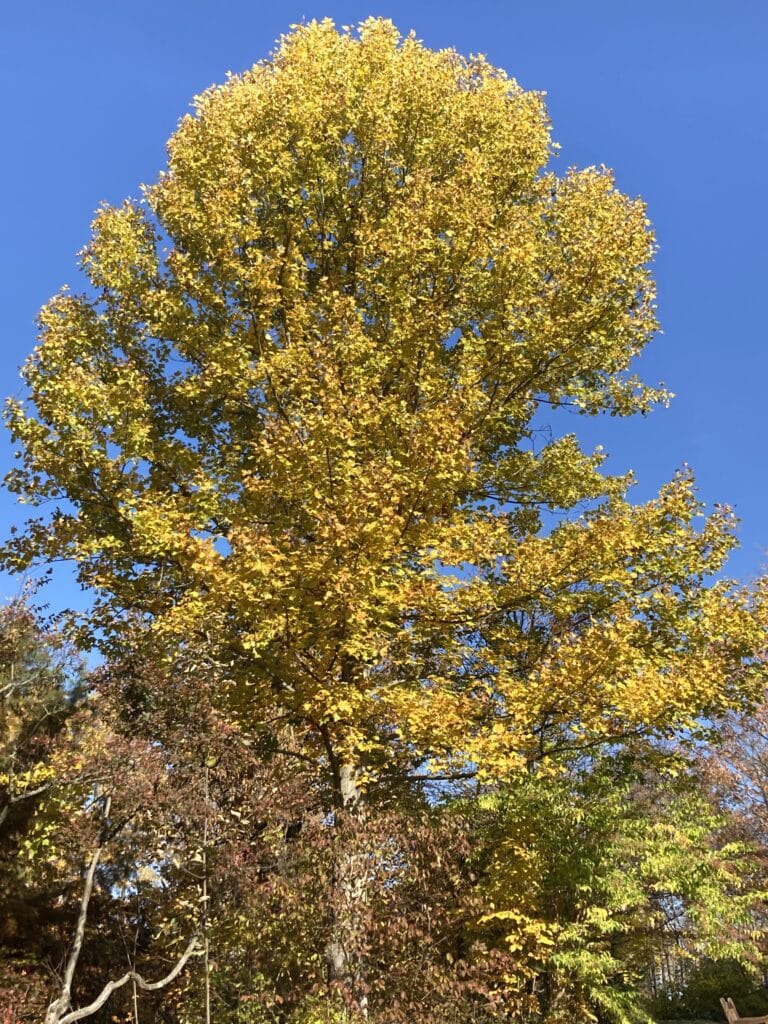
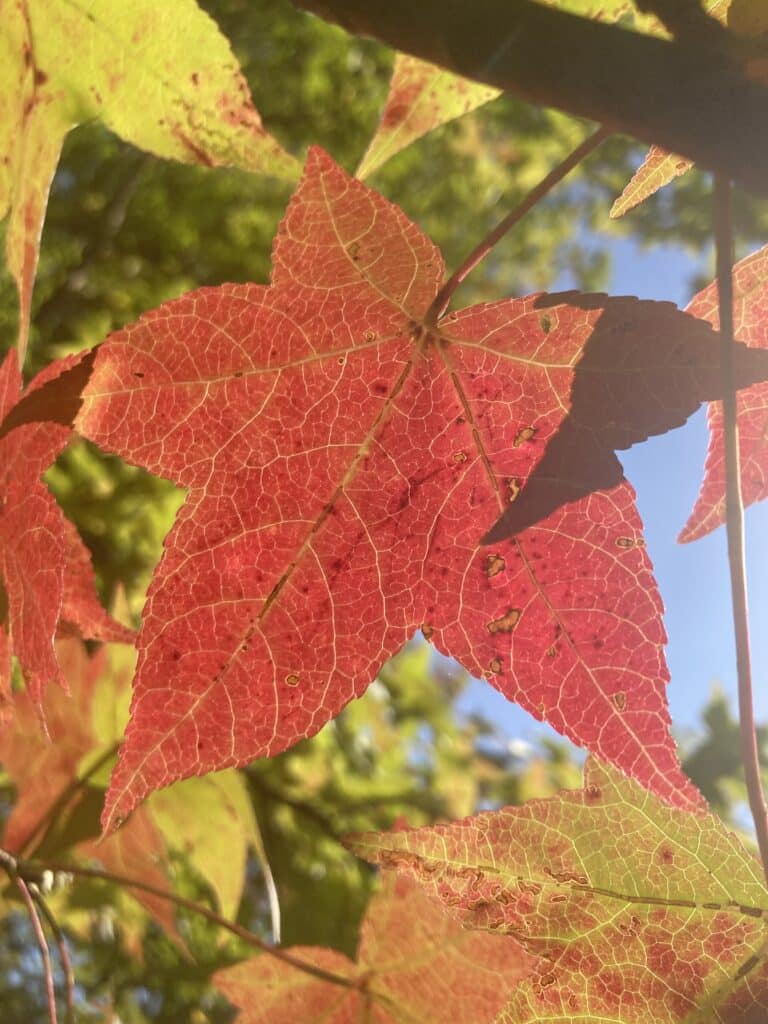
It’s officially peak fall color time here at the Holden Arboretum! A plentiful array of purple, red, orange and yellow have transformed our trails. Here’s a small sampling of what you’ll see on your next trip. Visit soon, the color may not last!
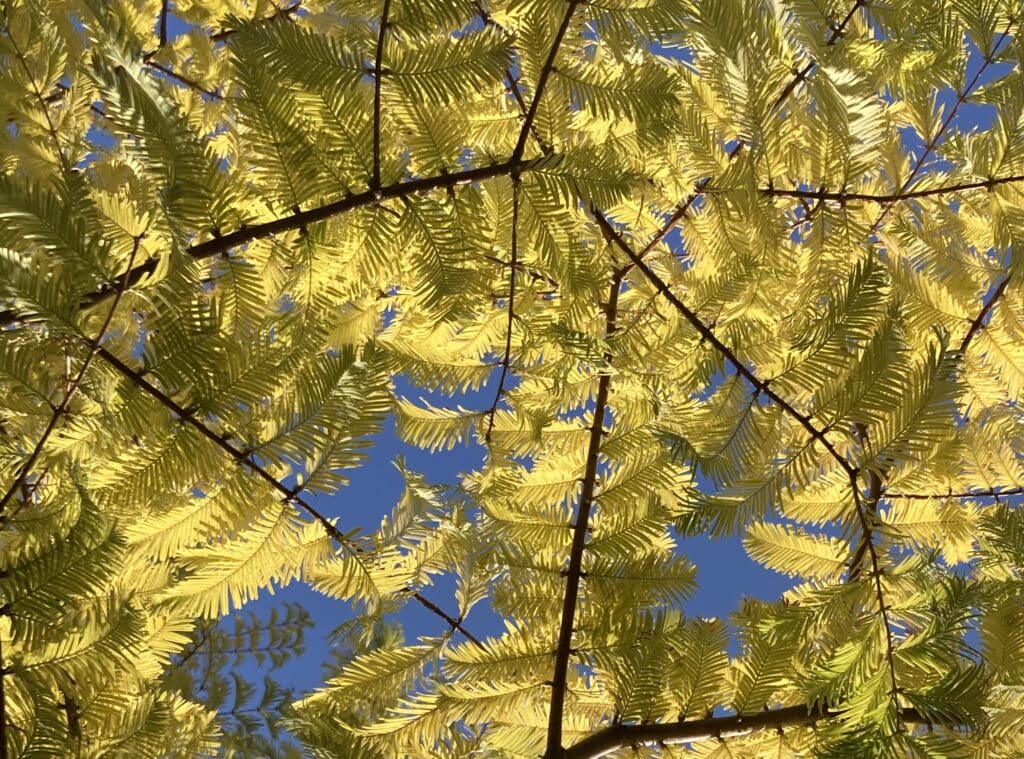
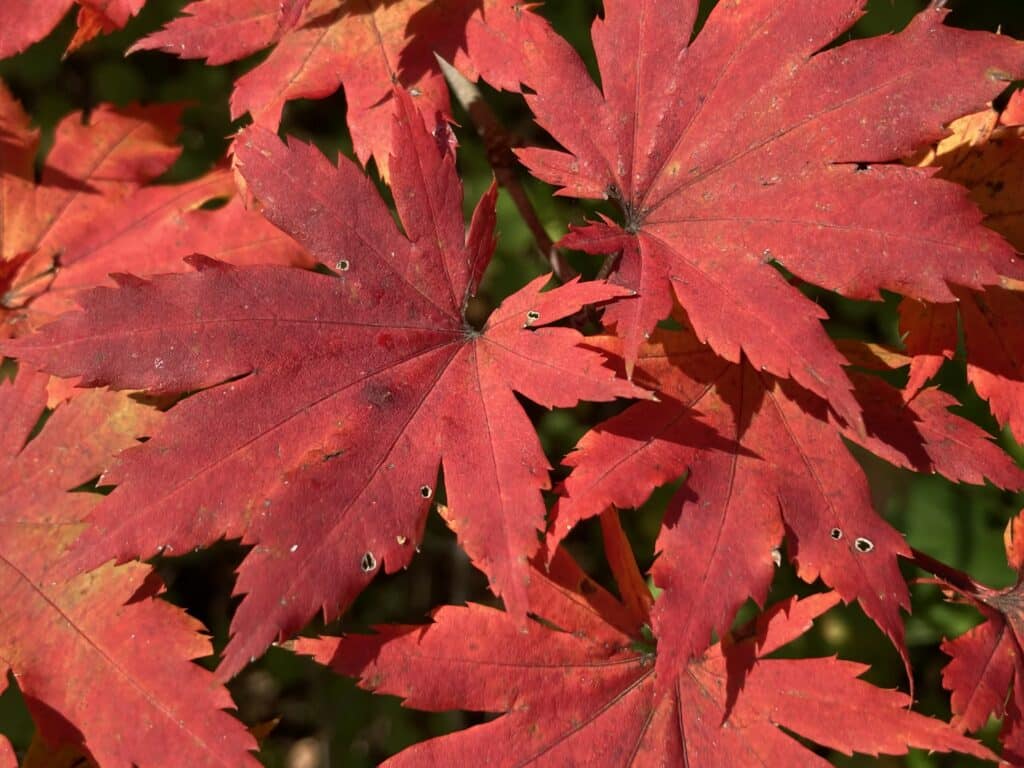
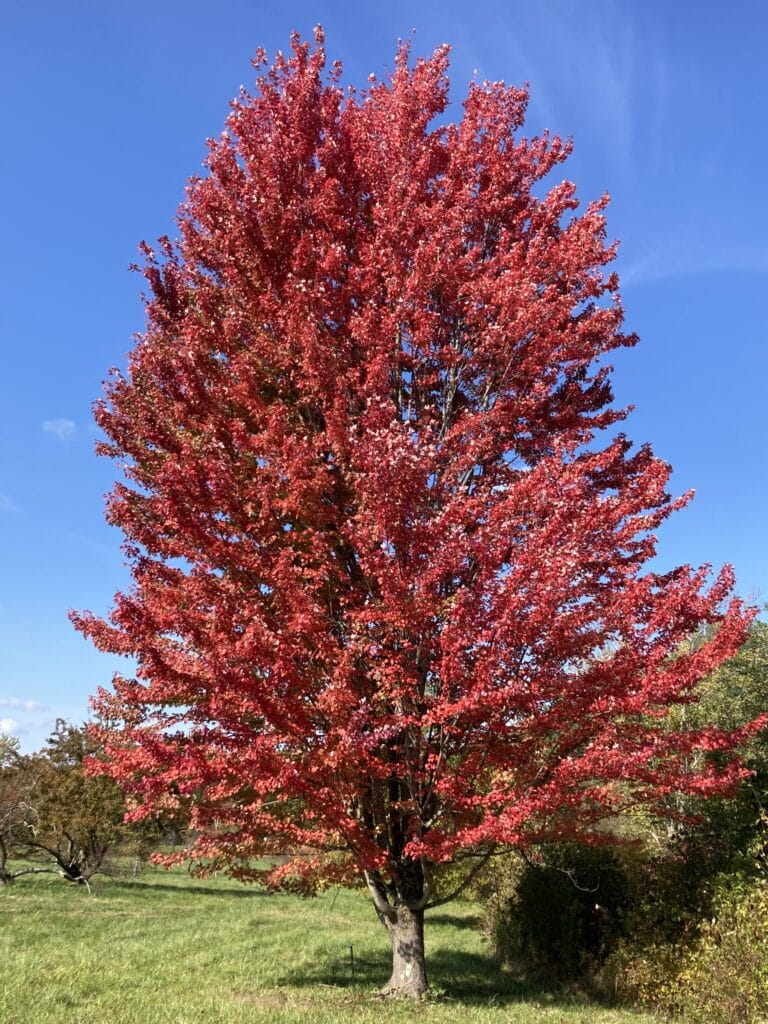
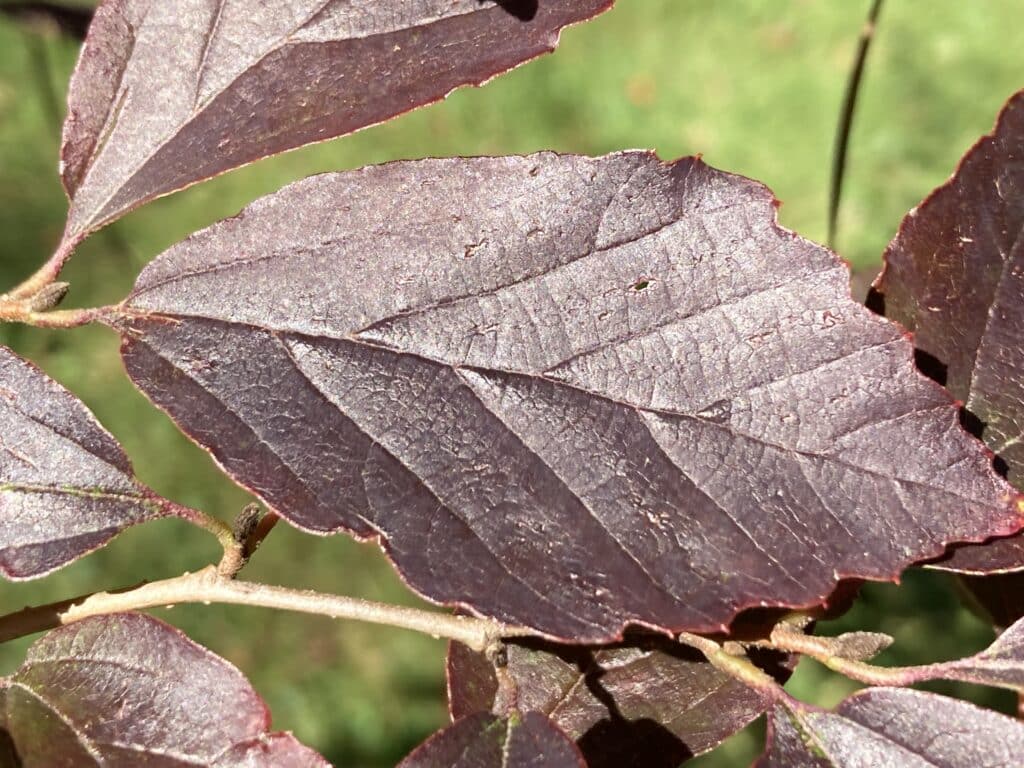
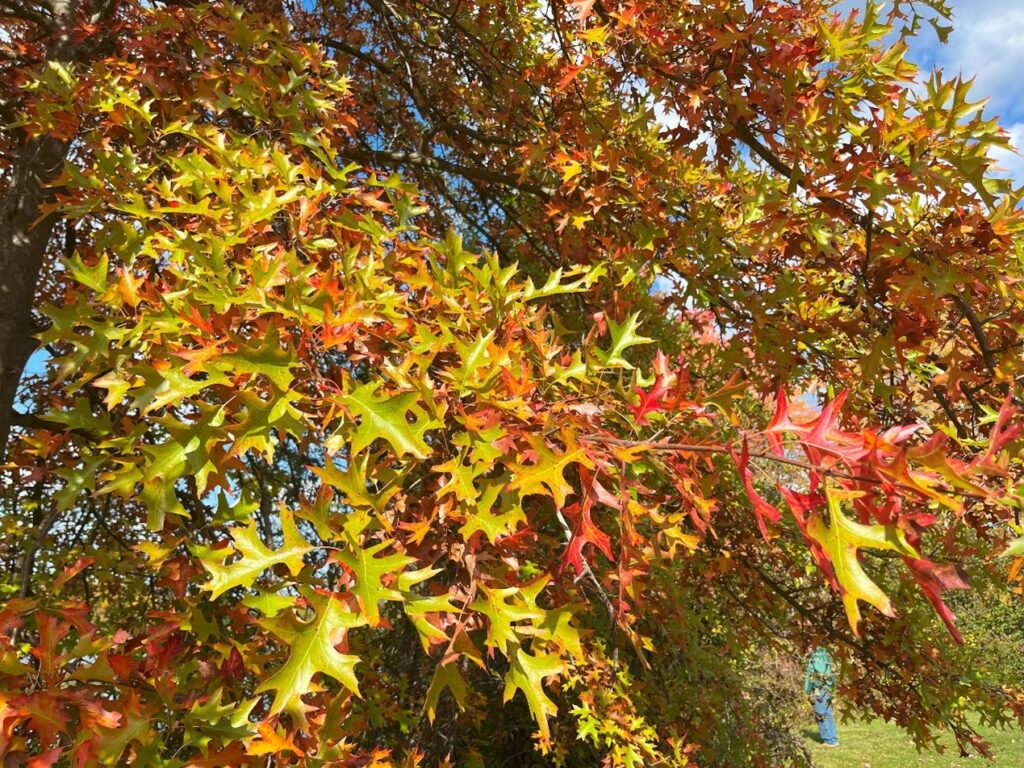
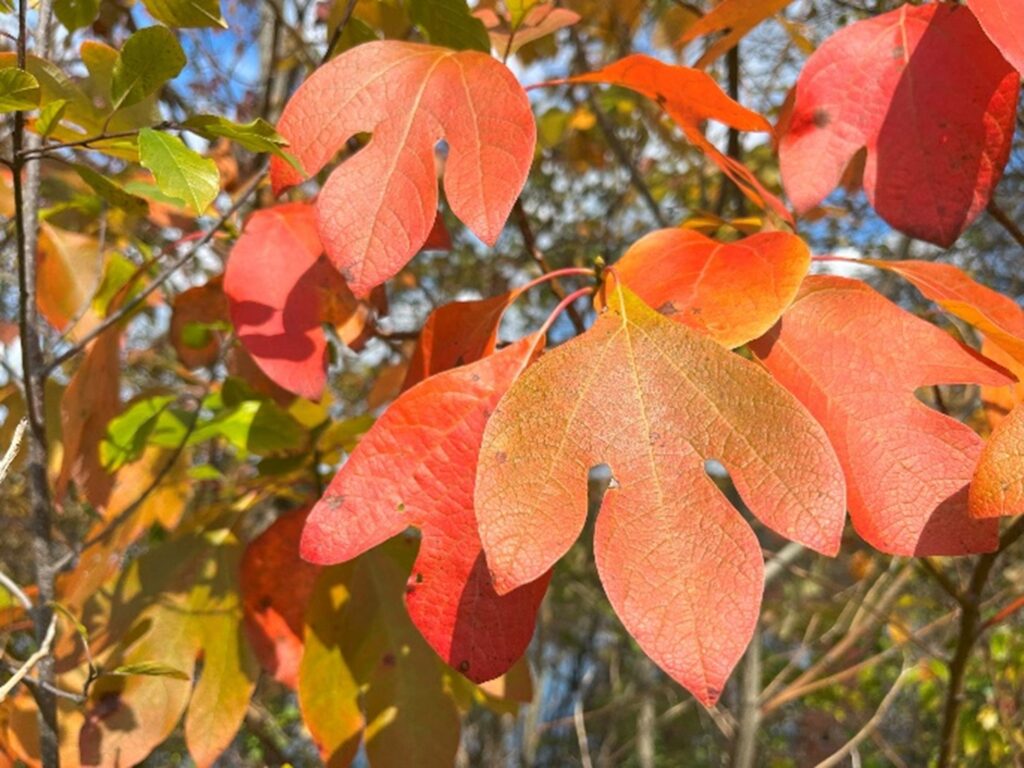
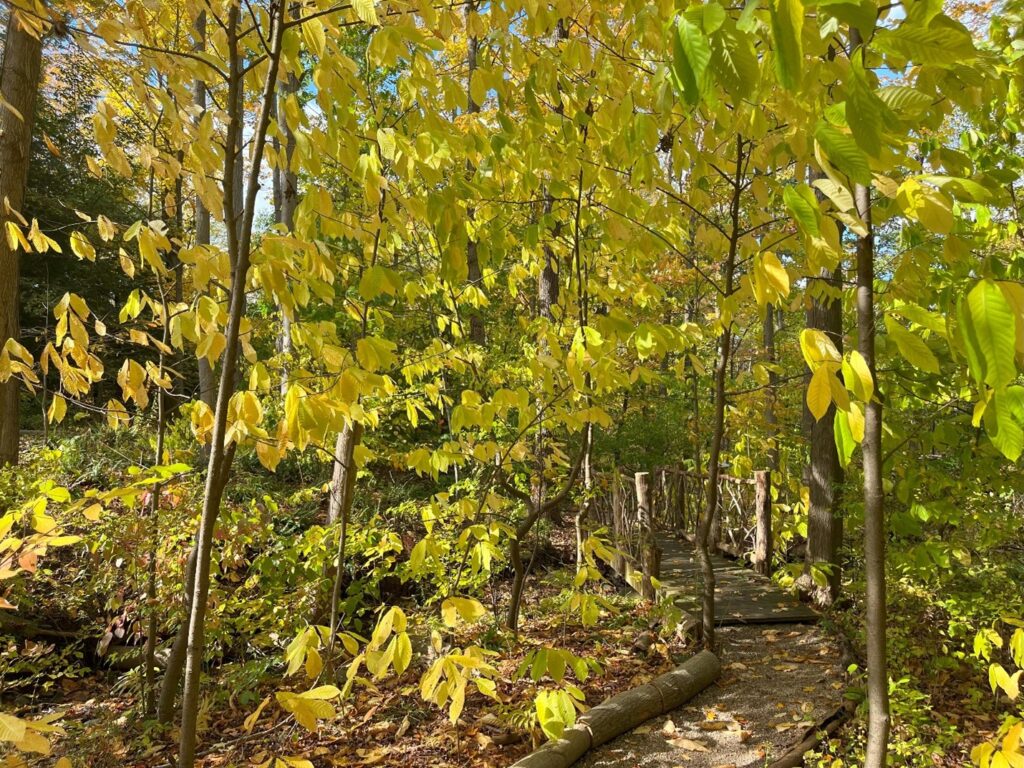
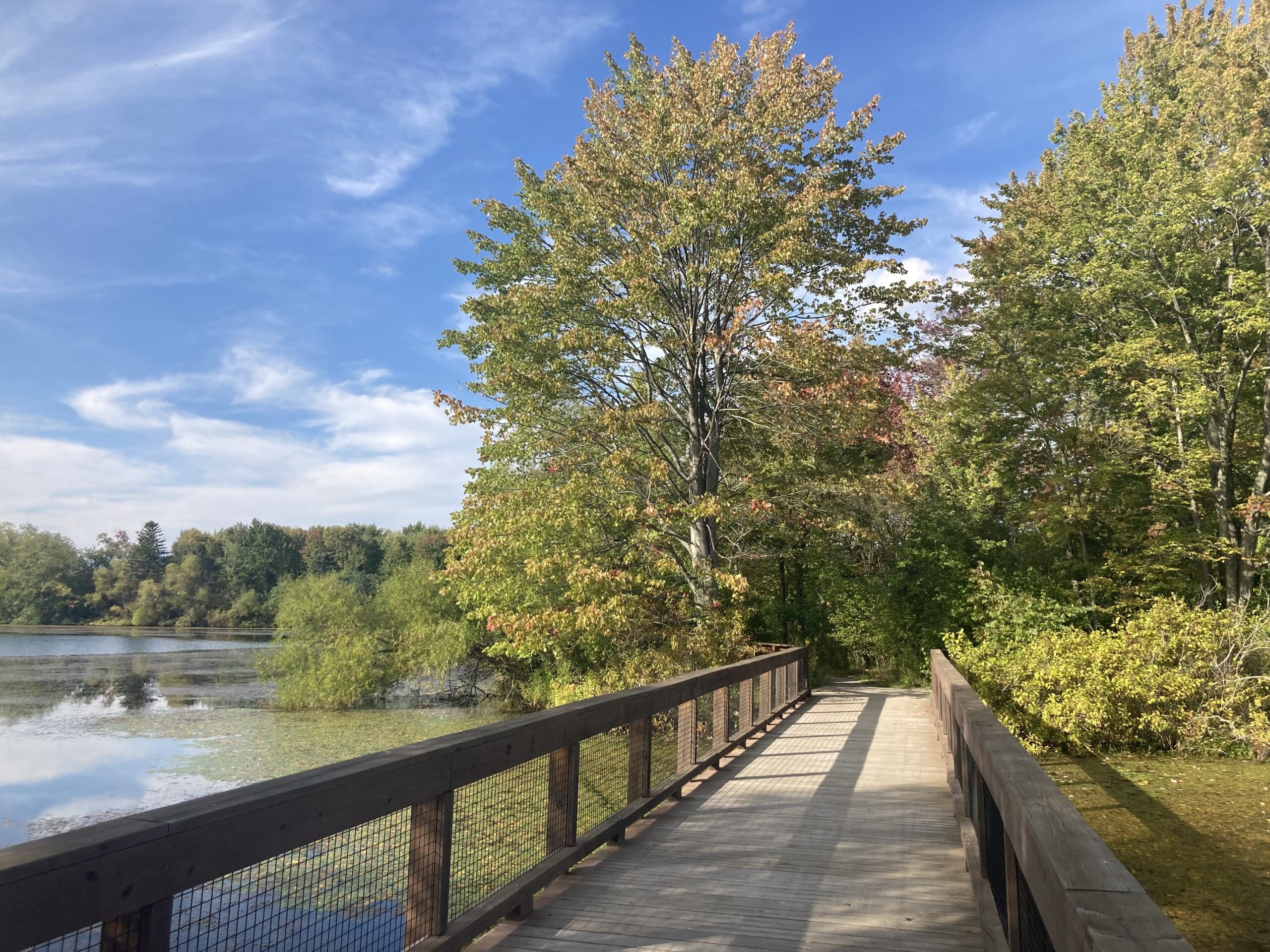
Colder days and nights, and more rain are a great recipe for vibrant fall color. More change in on the way this week, so lace up those hiking boots and hit the trail with your camera. The Kalberer Emergent Tower will provide beautiful 360 degree views of the fall foliage and the Murch Canopy Walk will immerse you in the treetops. The best spots to view fall color this week at the Arboretum are around Blueberry Pond, Corning Lake, Foster Pond, the Holden Wildflower Garden, and the Crabapple Collection north of the Corning Visitor Center. Happy exploring!
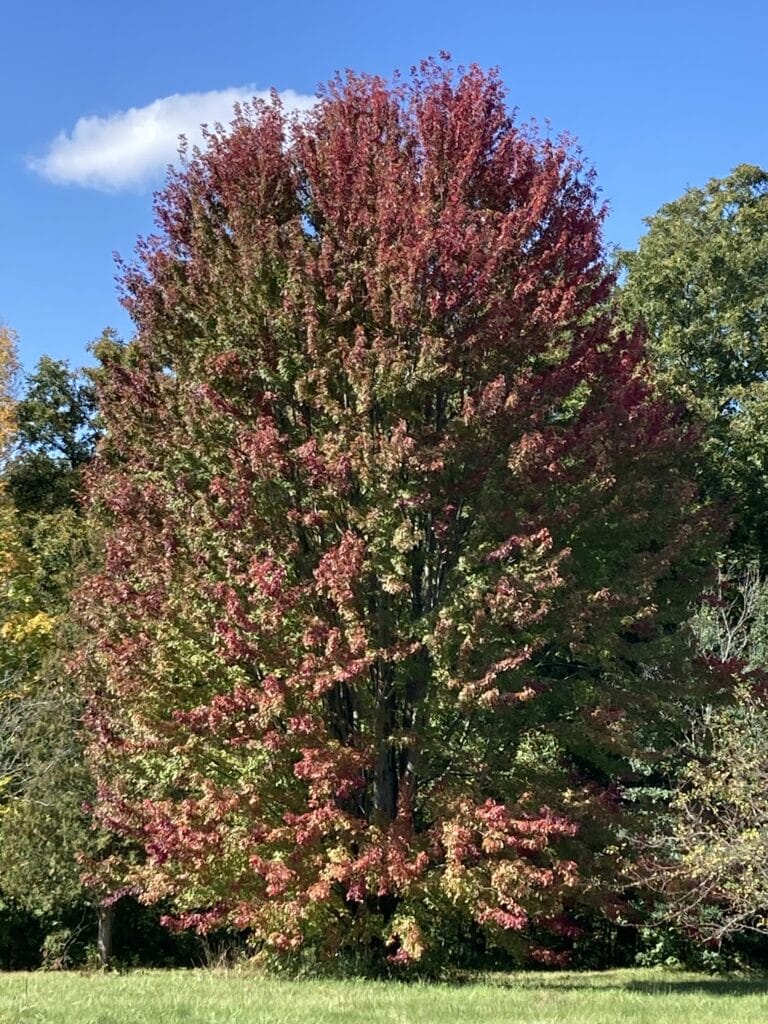
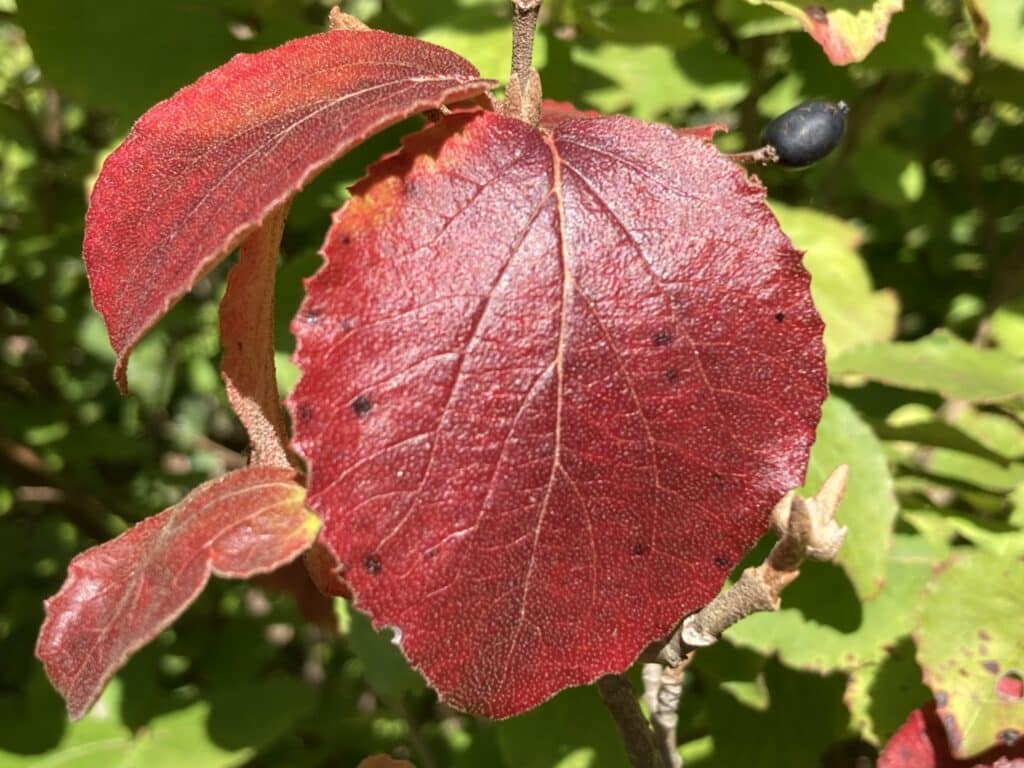
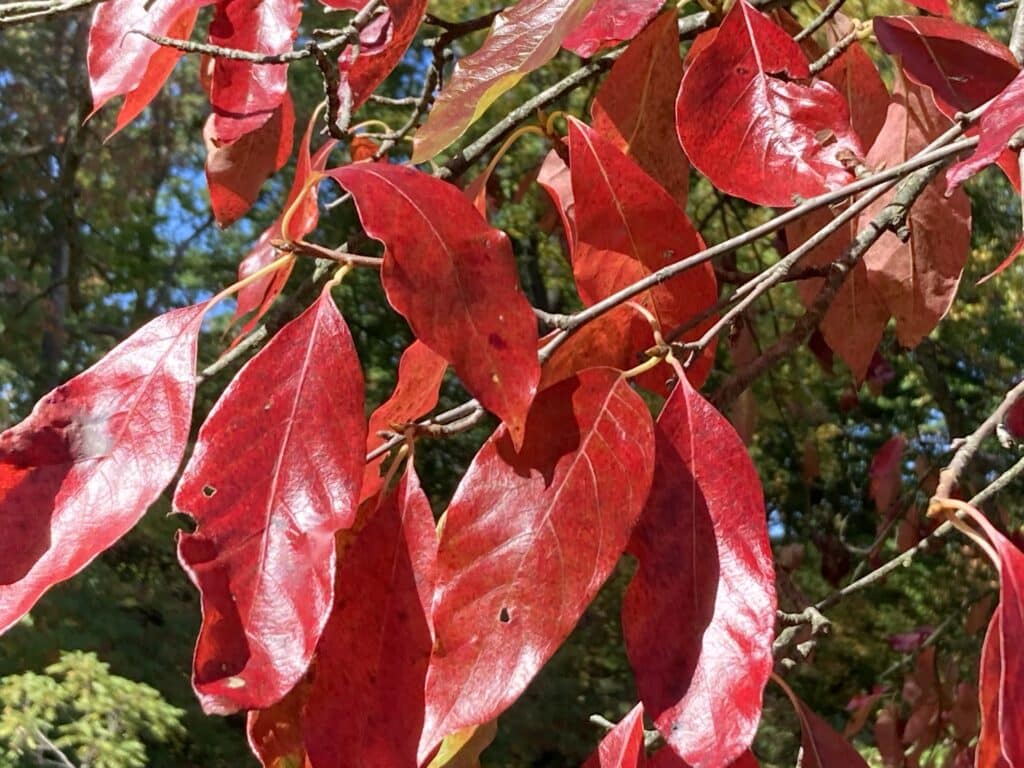
Peak fall color is nearly here at the Holden Arboretum. Plan your visit today and don’t miss out on hiking our Leaf Trail, and climbing the Emergent Tower and Canopy Walk for immaculate autumn foliage views.
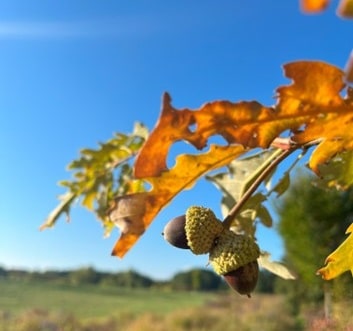
Swamp white oak (Quercus bicolor) is just beginning to show its dusty yellow fall color, but its acorns are real show-stoppers too. This year appears to be a bumper crop as acorns all over the arboretum are in abundance this fall. Check out several young swamp white oaks along the Norweb Tree Allee—and don’t slip on an acorn!
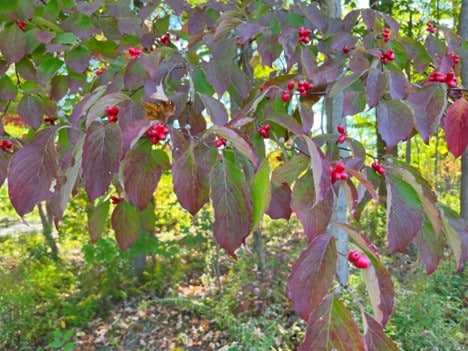
Flowering dogwood (Cornus florida) is best-known for its showy white bracts in spring, but it has beautiful fall color as well. At their peak, leaves will be a rich red-mahogany color. Our flowering dogwoods around the arboretum are currently in various stages of fall color, and mature specimens really stand out with their brilliant, ripe red fruits.
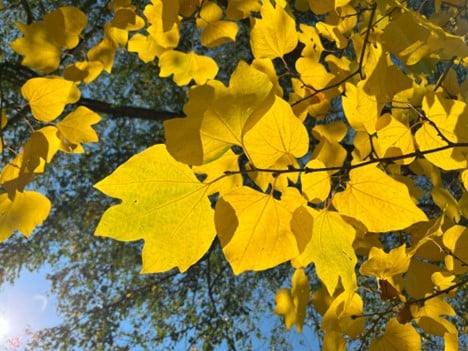
Japanese spicebush (Lindera obtusiloba) has some of the most brilliant fall color to be found at the Arboretum this time of year. This species is related to our native spicebush, but has larger, lobed leaves, and can be found on the west side of Blueberry Pond. On clear, sunny days, this species’ buttery yellow leaves contrast beautifully with the blue sky to create an irresistible photo opportunity.
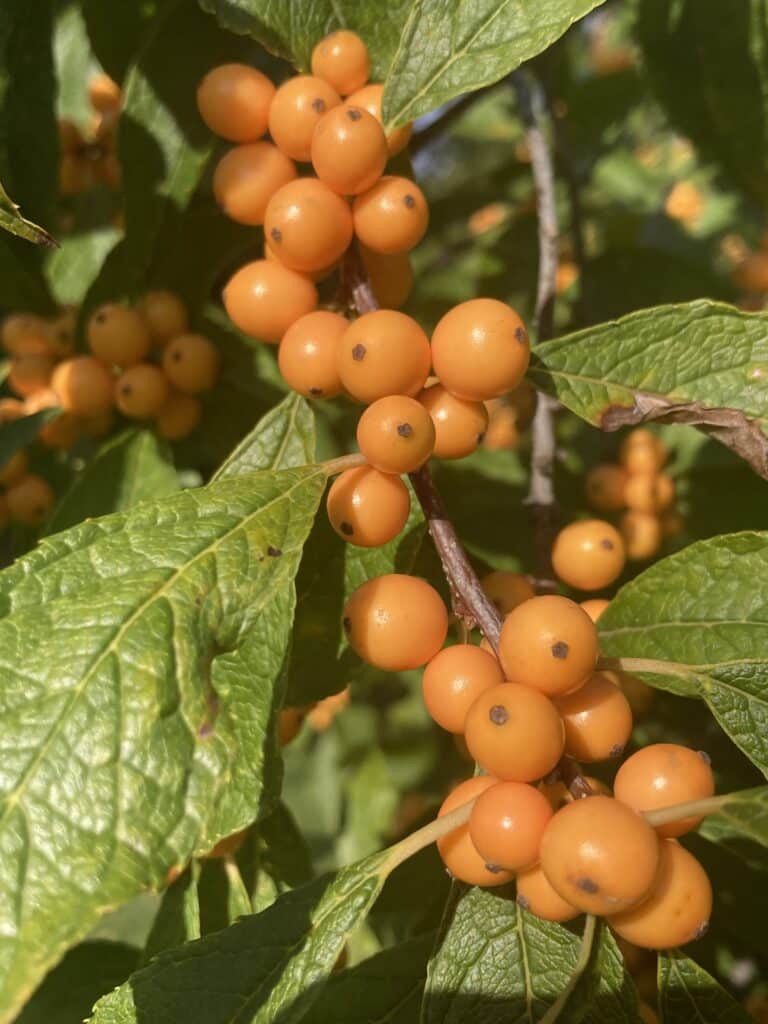
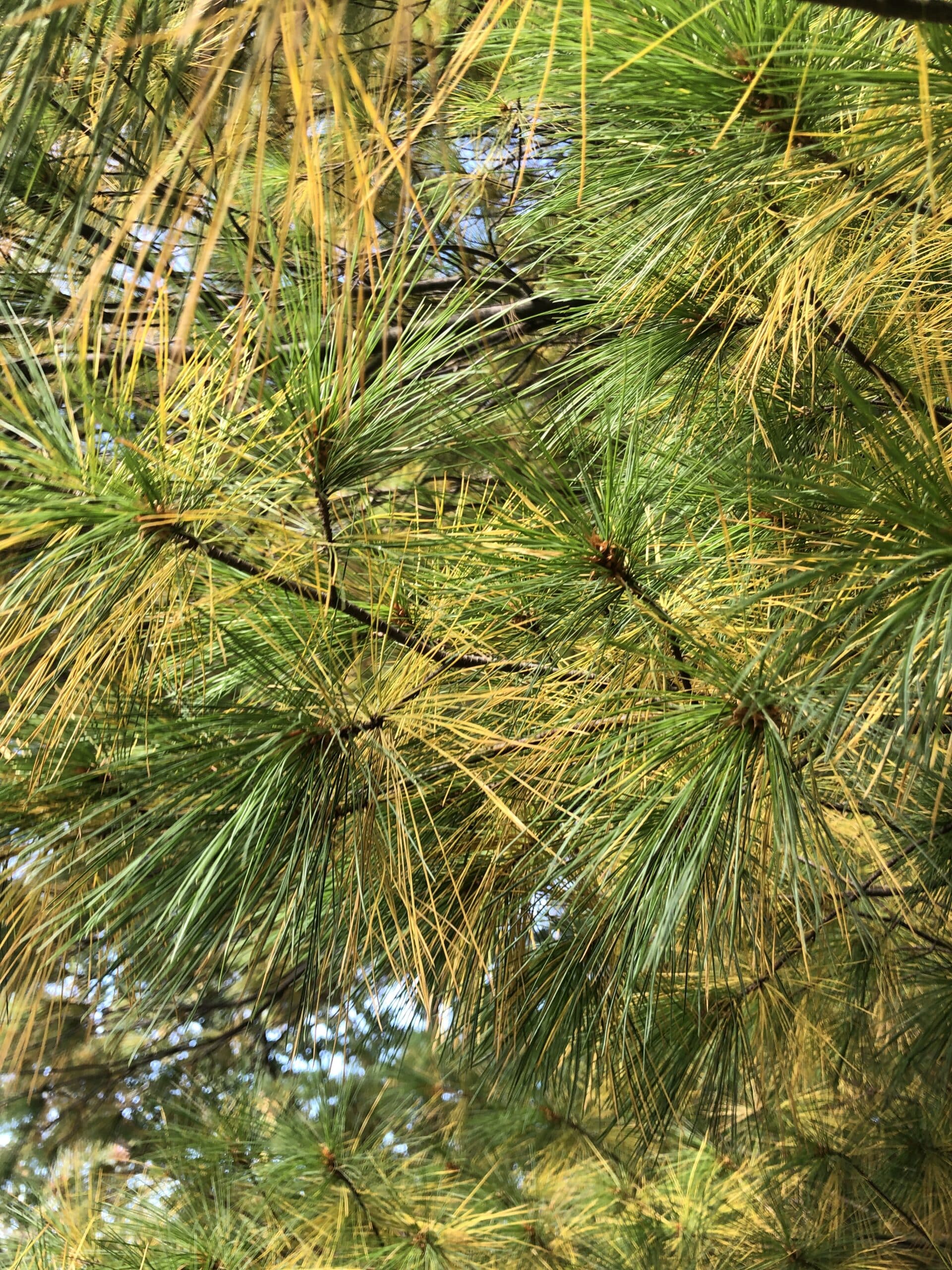
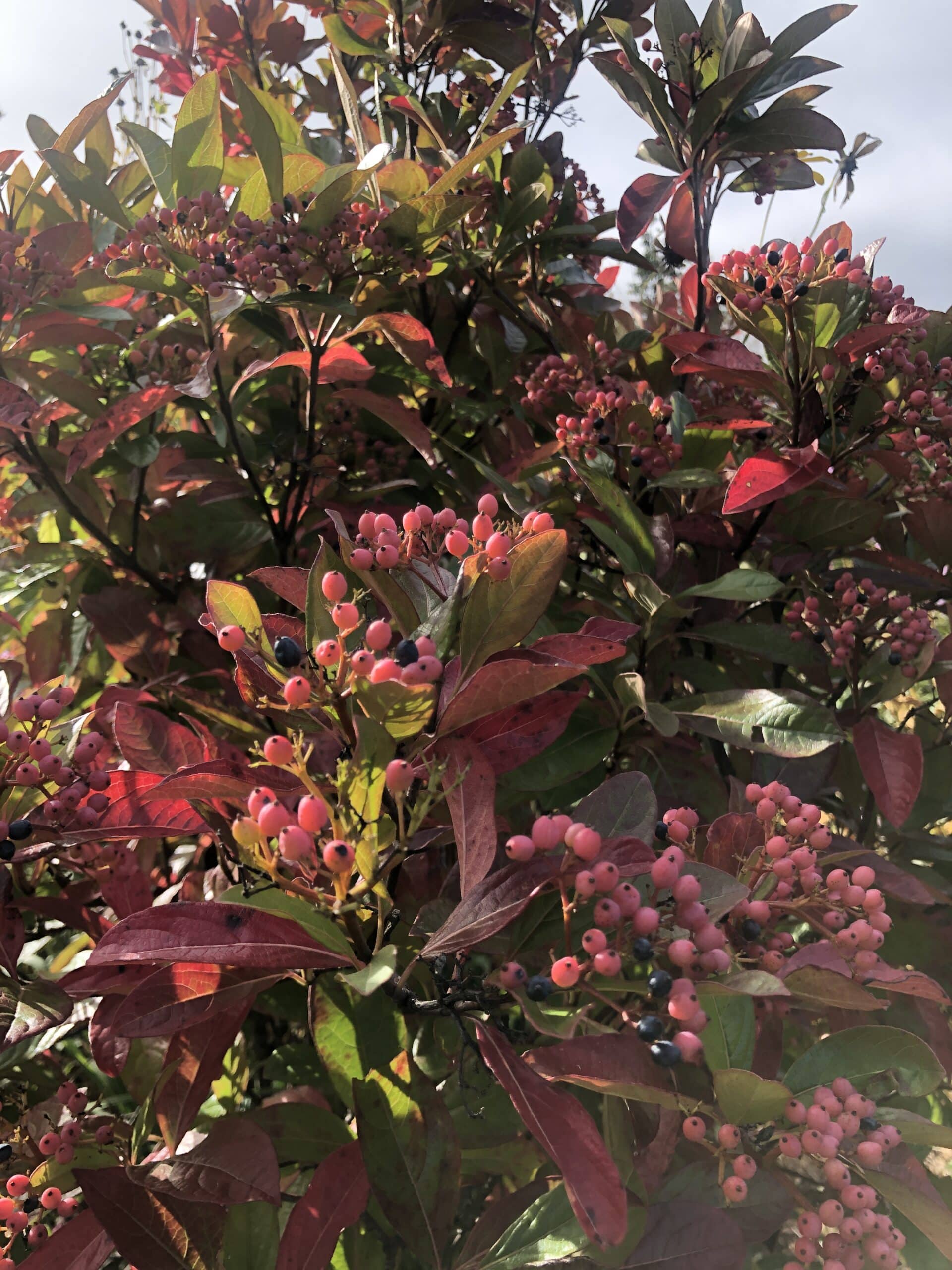
Fall color has increased greatly over the past week, with more plants and trees showing stunning shades of yellow, orange and red. Large leaf rhododendron, Witherod viburnum, and white pine all have unique color pops of color this time of year. The areas around Corning Lake are still displaying the most color this week, with the addition of some great pops of color near Blueberry Pond and Foster Pond. Also, the Norweb Tree Allee has some spectacular wildflowers in bloom amongst the fall foliage.
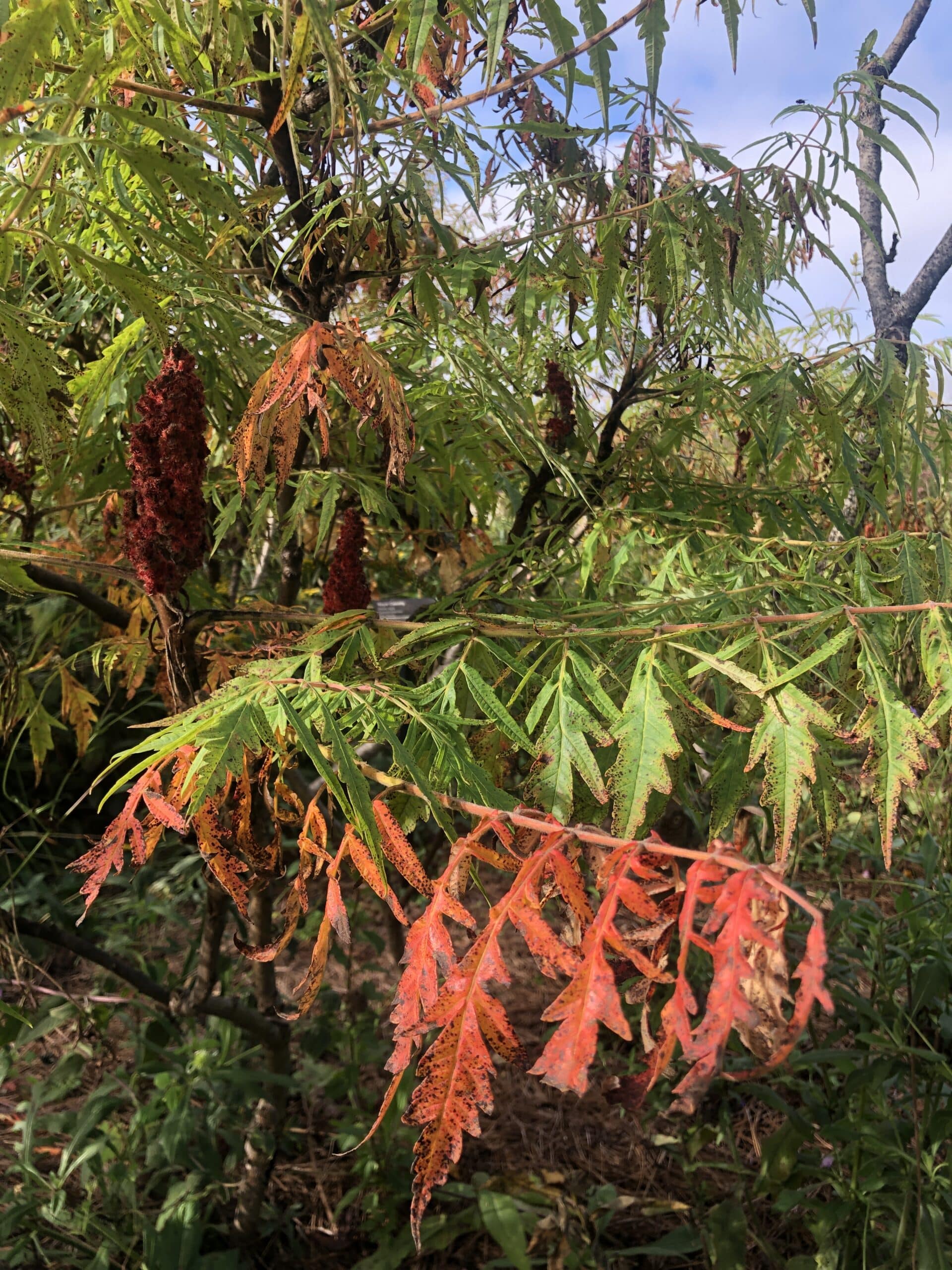
Staghorn sumac (Rhus typhina) is a large shrub/small tree often growing en masse with red to red-orange fall foliage. Individual specimens can reach heights upwards of 20 feet, while spreading via underground shoot called stolons to form a clonal grove over time. Individual leaflets have a serrate margin and a accentuated leaf tip. The erect, deep red, fuzzy fruits are clustered on terminal branches, ripening this time of year. Young branches are covered in a fine red/brown hairs, resembling deer antlers in their velvet covered stage, hence the common name “staghorn”. Find staghorn sumac in the Butterfly Garden as well as our Core Natural Areas at the Holden Arboretum.
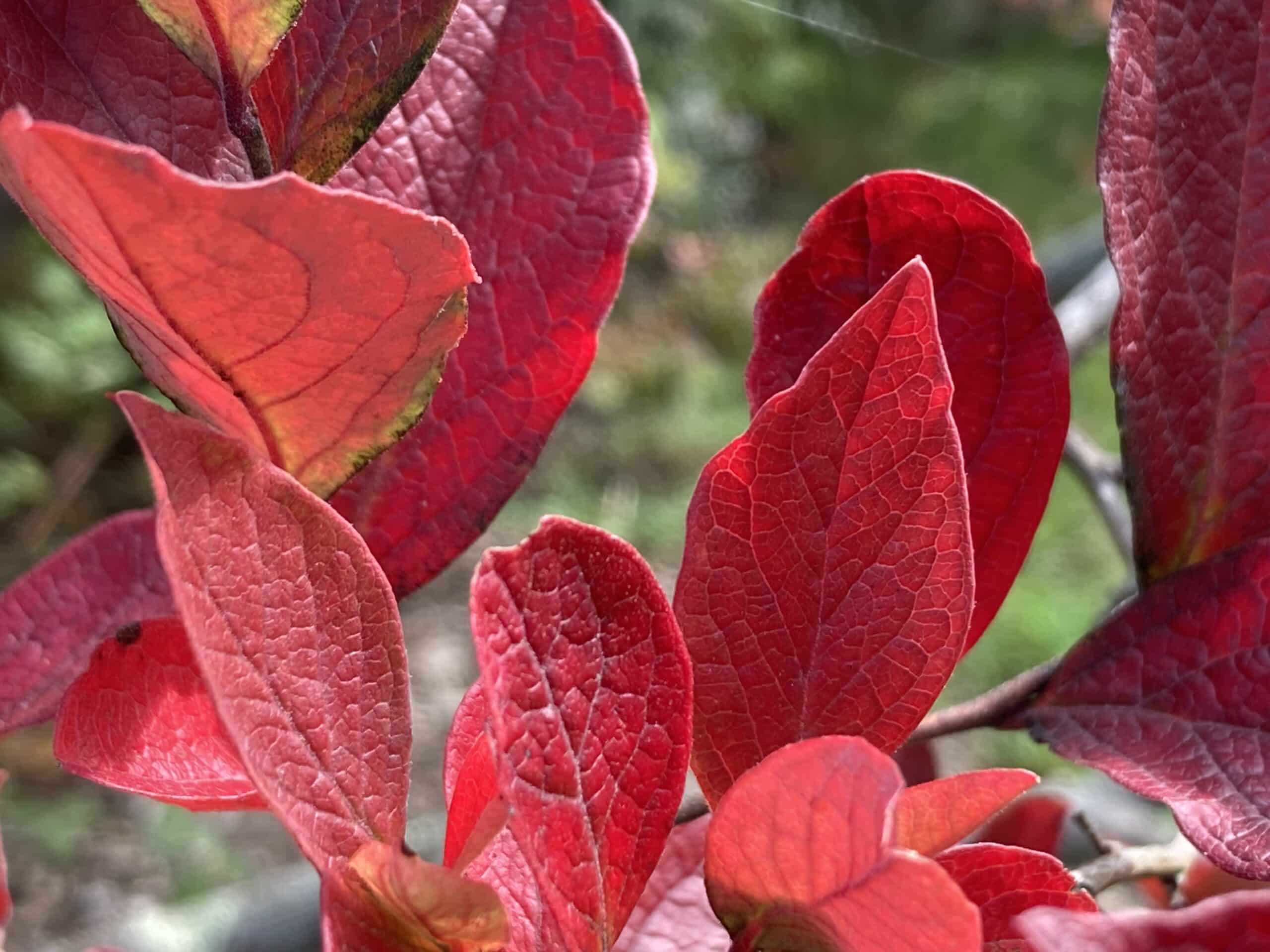
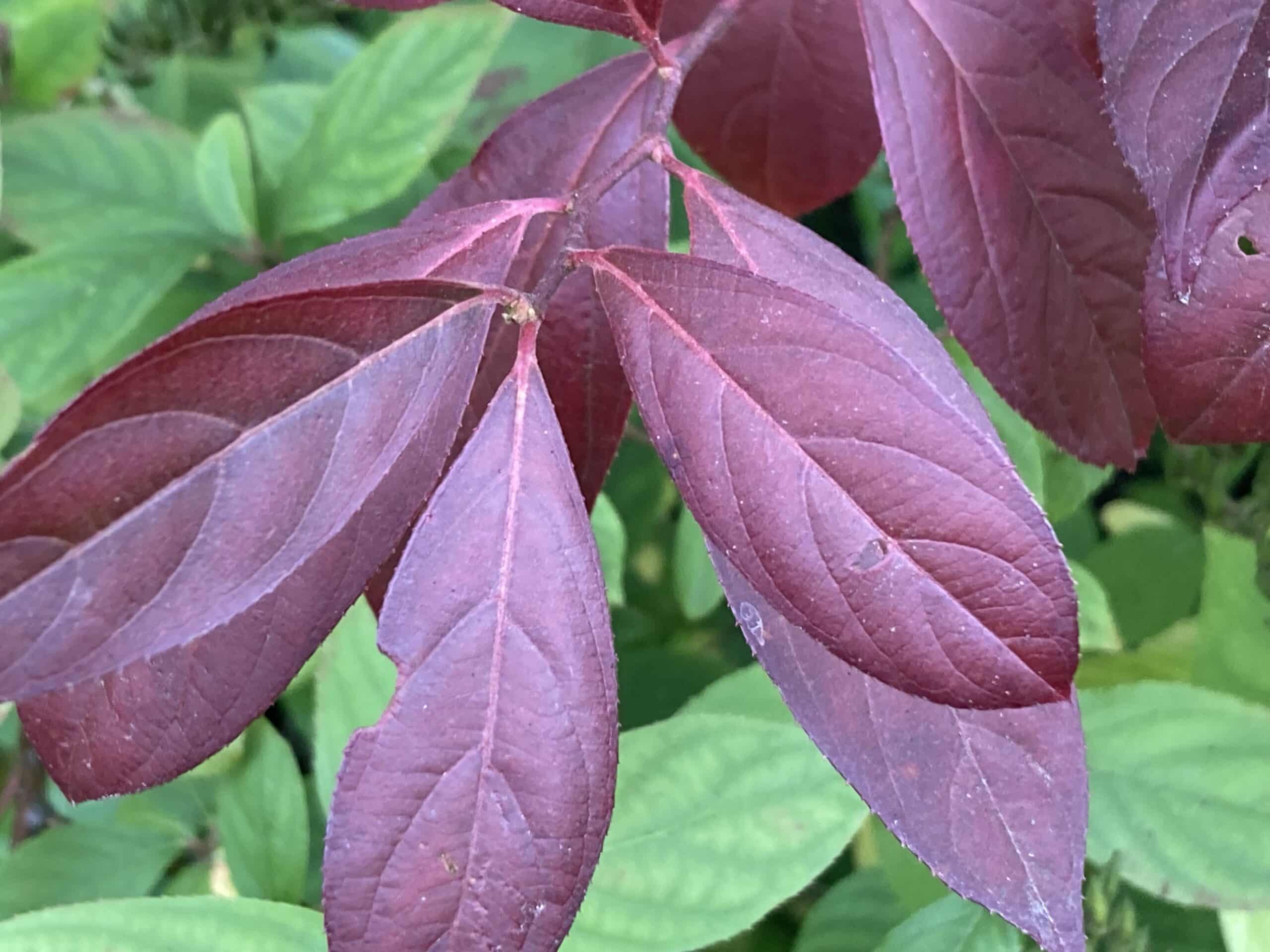
Shining sumac (Rhus copallinum) can be found on the west side of Blueberry Pond at the Arboretum. Also around Blueberry Pond, keep your eyes open for Highbush blueberry (Vaccinium corymbosum), which has bold red leaves right about now. Virginia sweetspire (Itea virginica) will also be found around Blueberry Pond, with more purple-red leaves.
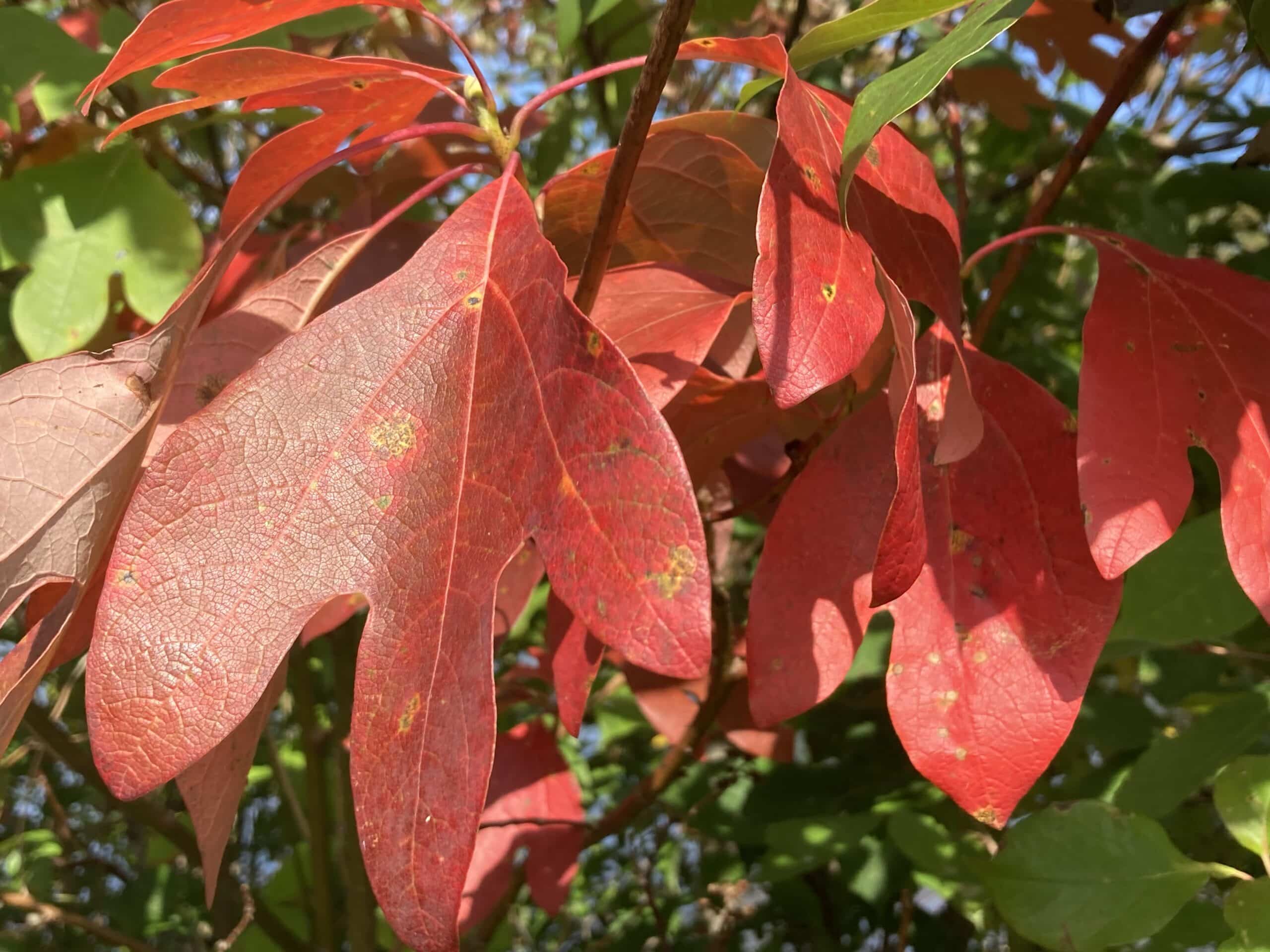
Sassafras (Sassafras albidum) can be found displaying deep shades of red on the south side of Corning Lake at the Arboretum.
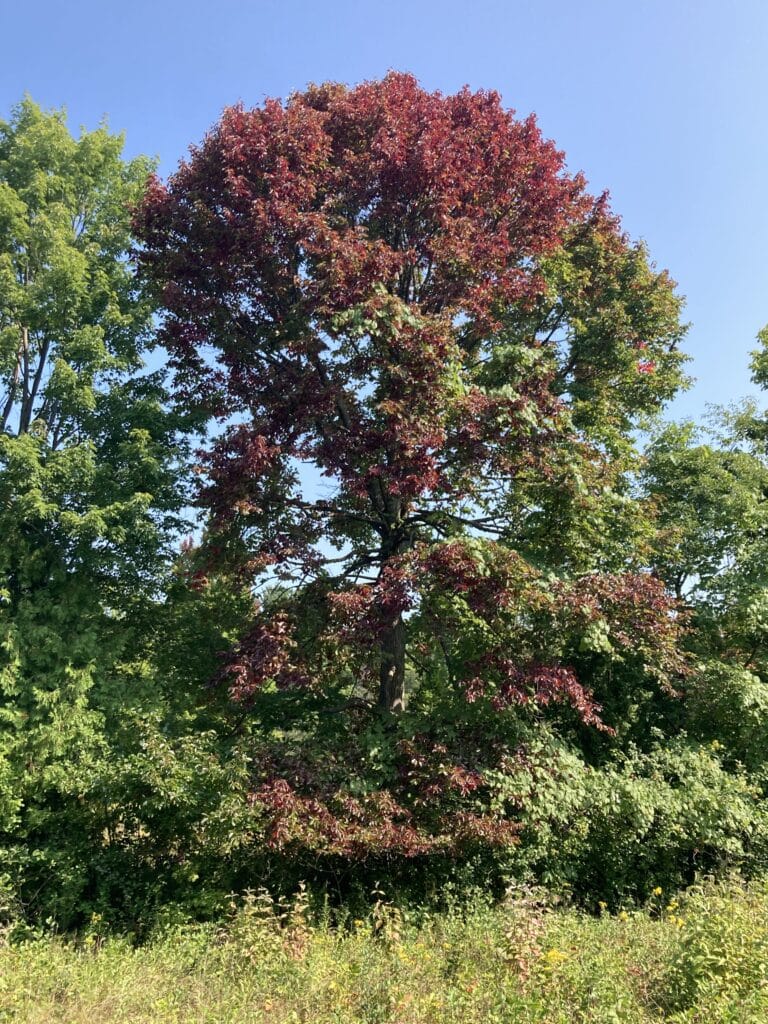
Fall Color Watch begins this week with some significant pops of color at the Holden Arboretum. Red maple, tupelo and oakleaf hydrangea are all showing color early and will increase in the coming days. The best areas to visit this weekend are Corning Lake, Foster Pond, Blueberry Pond, and the Myrtle S. Holden Wildflower Garden. Happy exploring!
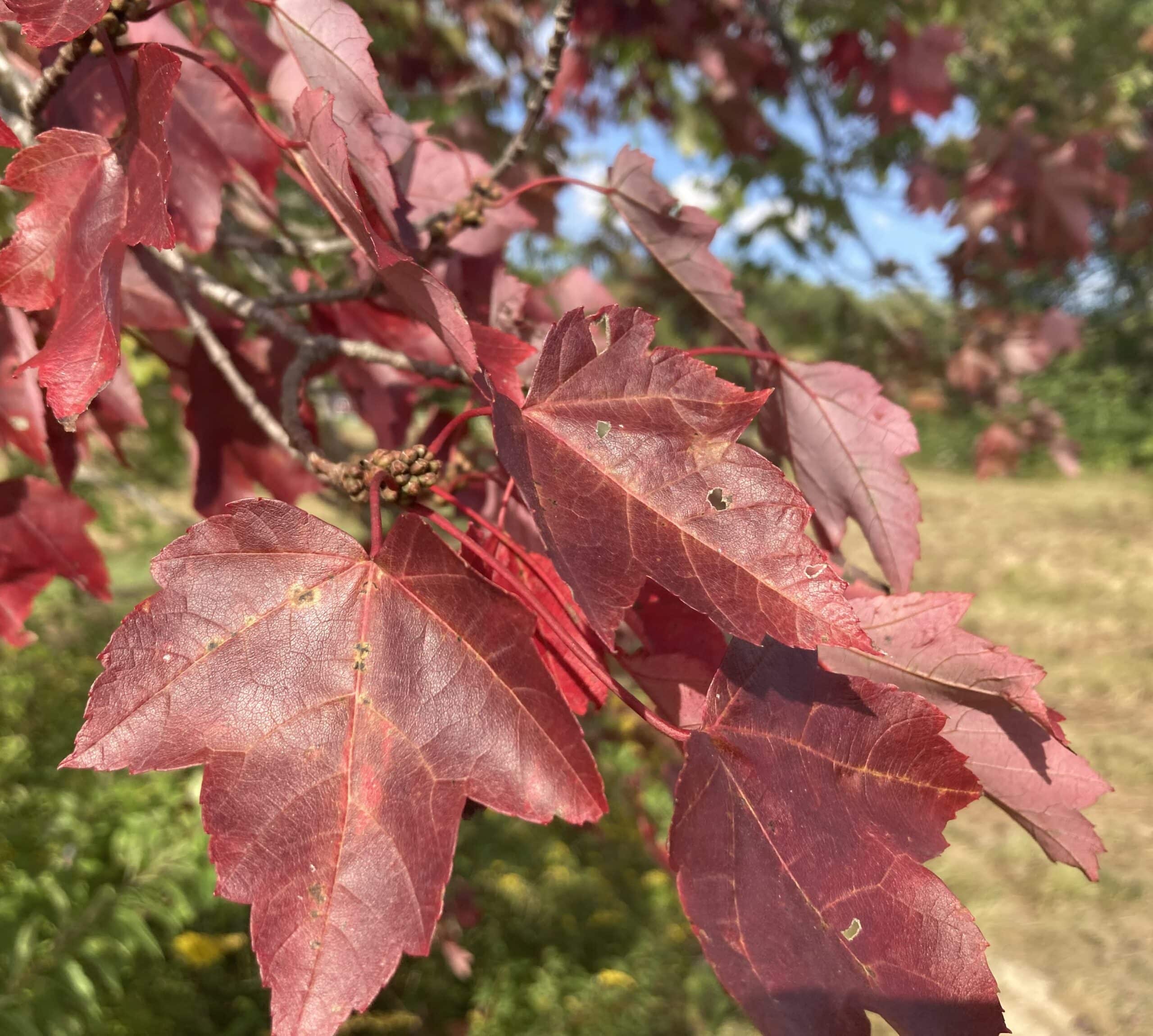
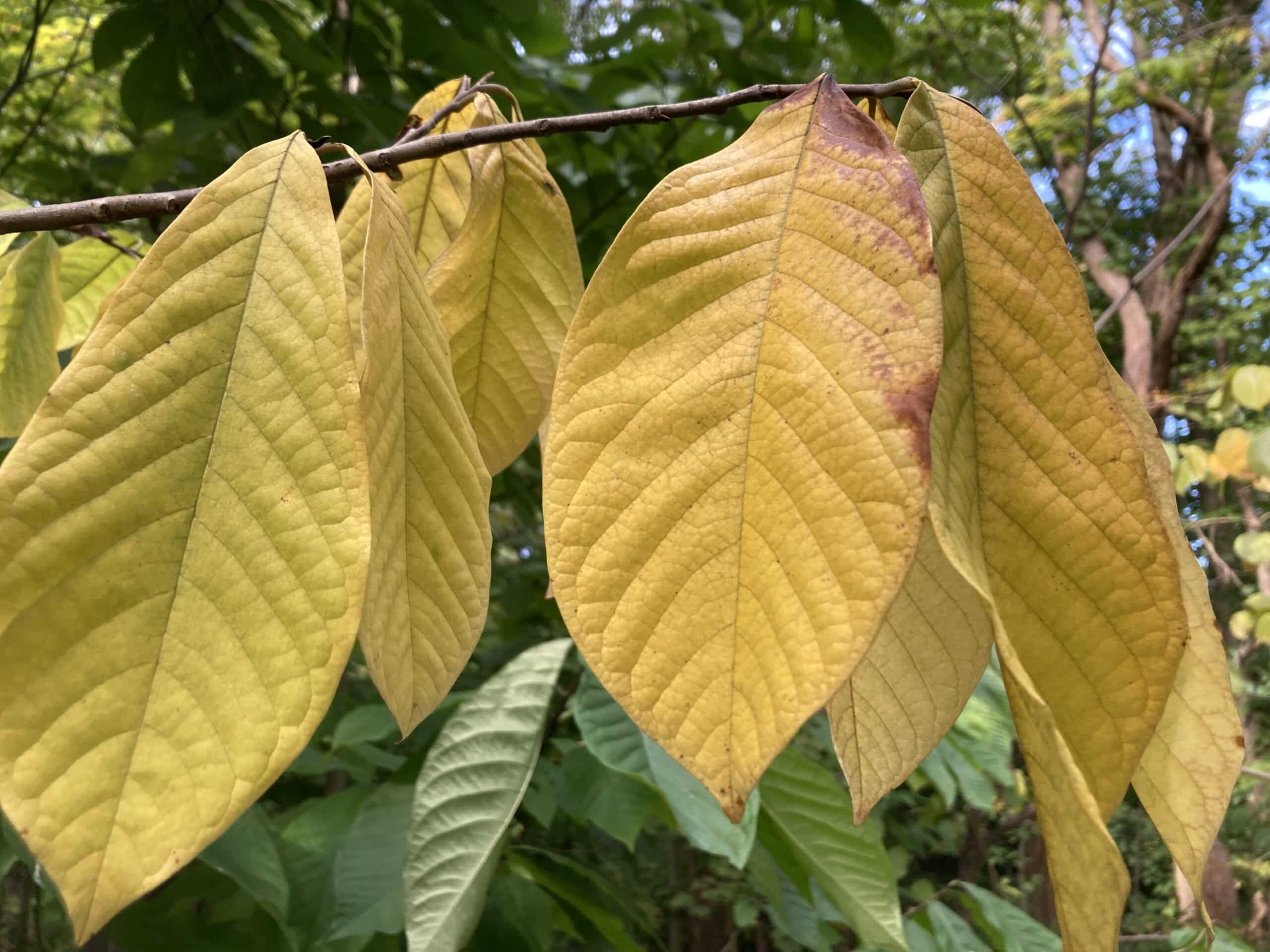
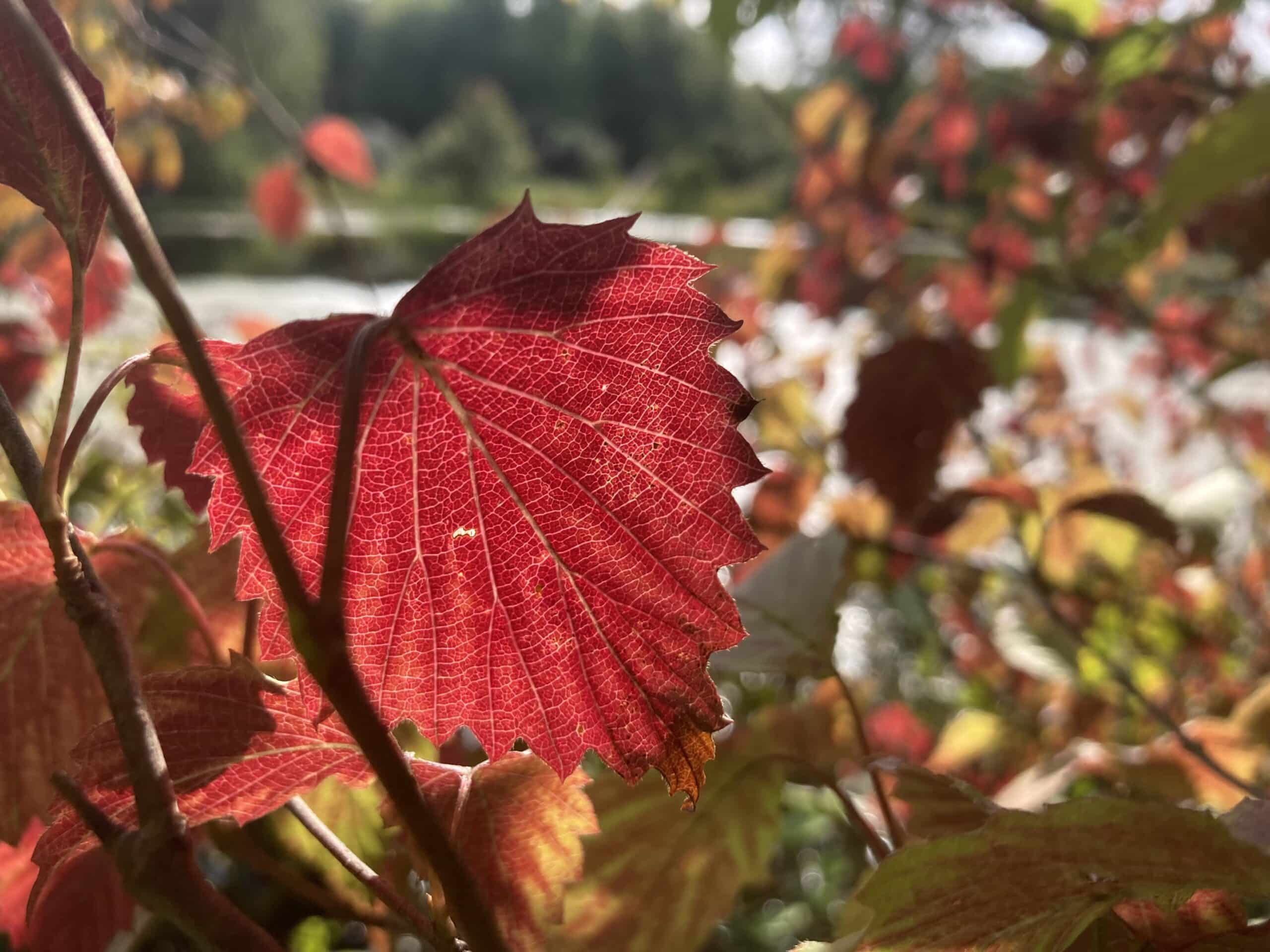
Red maples are one of few types of trees in our region that have opposite branching, and thus this is a useful identification feature. This time of year, there is no fruit or flowers present on red maples.
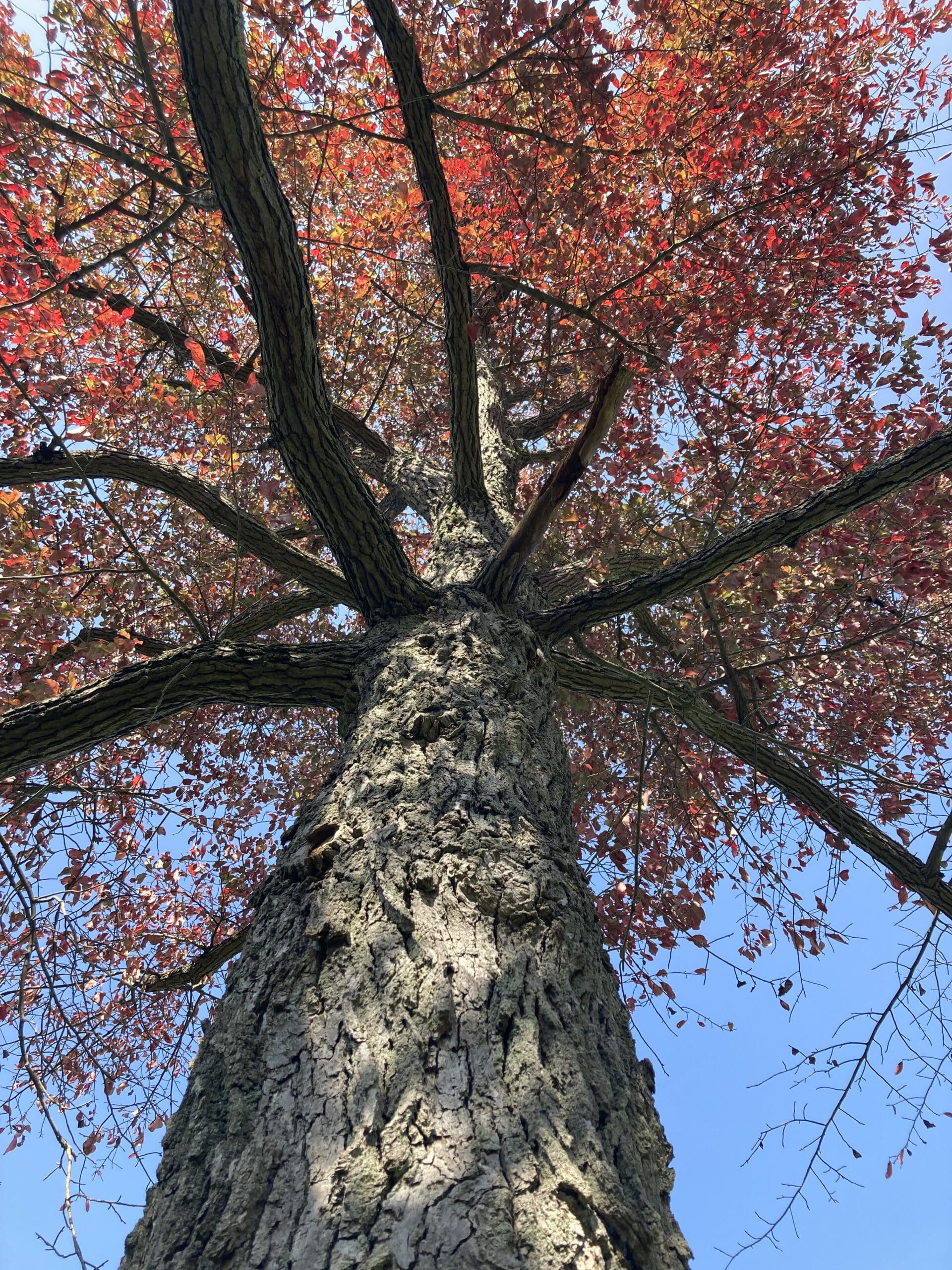
Tupelos are a medium to large tree with purple red to vibrant red fall foliage. The leathery, glossy, simple leaves have a wavy margin and are ovate to egg-shaped. The fall color is most vibrant on the upper side of the leaf.
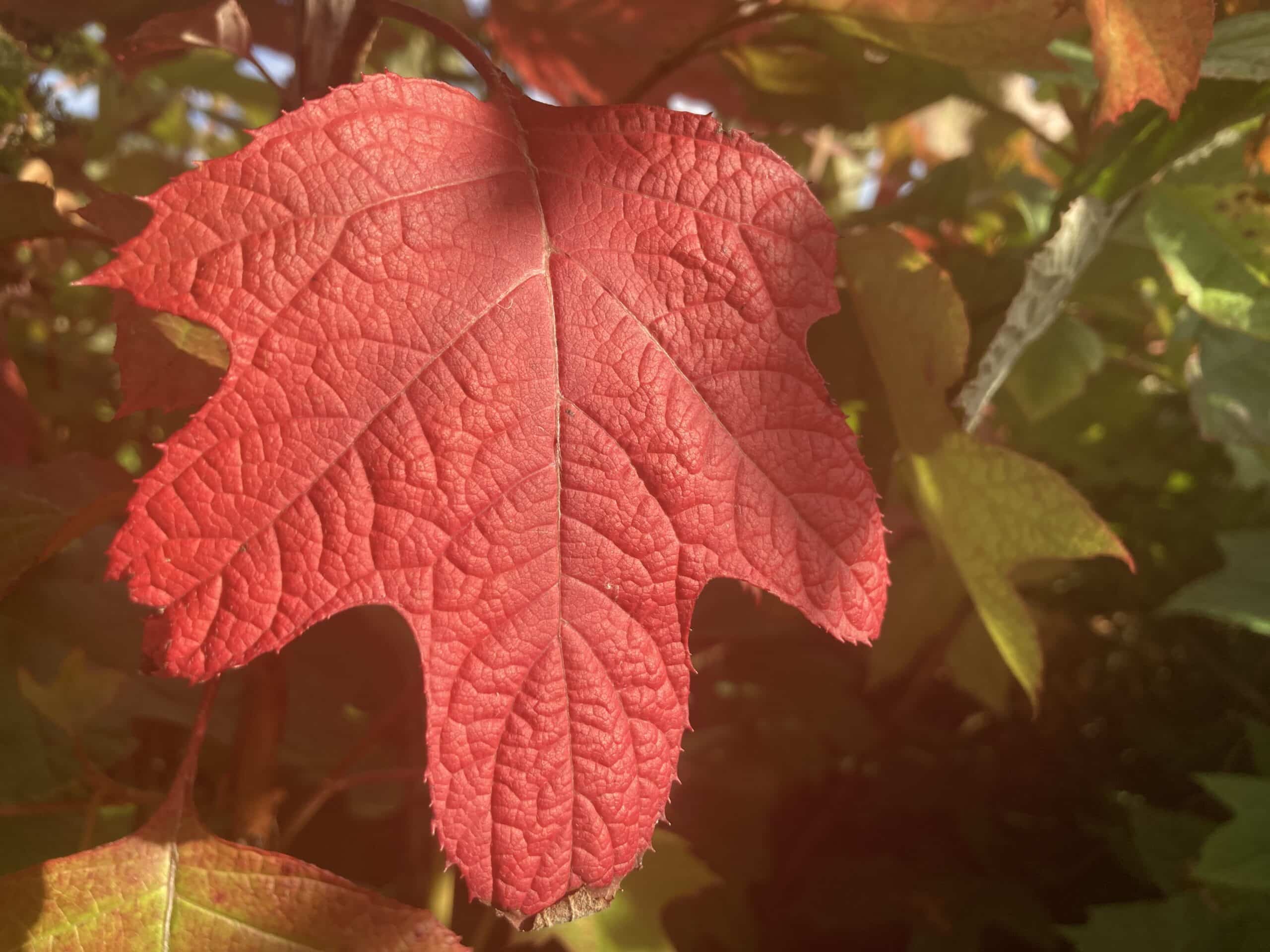
Oakleaf hydrangeas are a shrub with deep red burgundy to purple fall foliage. The leaf, as the common name infers, resembles the lobed leaves of an oak, most closely those of red or black oak. The showy bracts of the summer’s bloom persist into the fall and add nice tan brown contrast to the reddening leaves.
Fall Color FAQ
Why do leaves change colors in fall?
There are three main factors that impact the fall colors we see:
- leaf pigments, longer nights, and weather
During spring and summer, we see green leaves on most plants. This is due to the high levels of chlorophyll, the key to a plant’s ability to photosynthesize, or turn sunlight into food in the form of glucose.
As the days get shorter, and the nights longer, the stems of leaves begin to cut off the supply of sap, causing chlorophyll production to stop. As this occurs, other pigments within the leaves become visible. Dying leaves begin to burst with hues of yellow, orange, red and purple!
Weather also plays a significant role in the vibrancy and duration of fall color in Ohio. Warm days and cool (but not freezing) nights are the best recipe for a beautiful show of colors. The amount of moisture in the soil throughout spring, summer and fall also impacts the timing of peak fall color. A wet spring, followed by a warm summer and fall provides the best chance for brilliant colors.
What happens to leaves once they fall?
Fallen leaves and needles decompose and enrich the soil with nutrients. This fluffy top layer, referred to as humus, becomes food for the many organisms that live within the soil. This loose layer of soil also allows air and water to freely access the roots of plants. Pretty neat, right?
When is peak fall color in northeast Ohio?
It’s hard to say for certain, but peak fall color typically comes in October. Stunning shades of yellow, orange and red will begin in September, increasing in beauty each week until the trees drop their leaves. Don’t miss out! Start planning your hike through our 20 miles of trails, and take advantage of our Canopy Walk and Emergent Tower all season long!
Explore Holden Arboretum

Things to Do This Fall at the Arboretum
The ultimate fall destination: with over 3,500 acres to explore, you’ll see fall from a new point of view. Plus, enjoy the best leaf peeping in all the Midwest.
Read more
Attractions
Explore all 3,500 acres of our gardens, trails, and woodlands—and of course, these incredible sites.
Read more
The Most Picturesque Hikes at Holden Arboretum
Explore over 20 miles of trails you won’t find anywhere else, including a new natural-surface trail in Pierson Valley.
Read more

Nature Meditation Guide
Slow down, look closer, and let nature inspire you with the Nature Meditation Guide—your companion for journaling, drawing, and mindful moments in the landscapes of the Holden Arboretum.
Read more
Birding Guide for Holden Arboretum
Whether you’re a seasoned birder or just beginning to explore the world of birds, this guide will help you discover the best spots, seasons, and tips for birding success.
Read more
Can’t Miss Family Activities
Ready to trade screentime for greentime? A day at Holden Arboretum is always fun, educational, and immersive for the whole family.
Read more